A hernia is one of the most common surgical conditions that affects people of all ages — from newborns to senior citizens. Yet, many people in Pune either ignore the early signs or are unsure when to seek medical help. If you or someone in your family has noticed an unusual bulge in the abdomen, groin, or belly button area, it could be a hernia that needs proper attention.
Understanding the types of hernia is the first step towards getting the right treatment at the right time. At Sai Vedant Multi Speciality Hospital in Pune, patients receive advanced hernia care using the latest surgical techniques — from laparoscopic to robotic-assisted surgery — under expert guidance.
In this blog, we will explain what a hernia is, cover all major types of hernia, discuss the symptoms to watch out for, and help you understand when you should see a Hernia specialist in Pune for proper diagnosis and treatment.
What Is a Hernia?
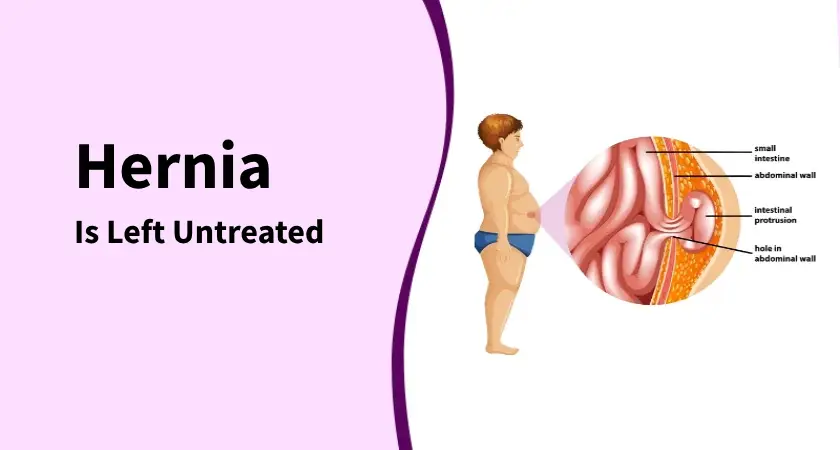
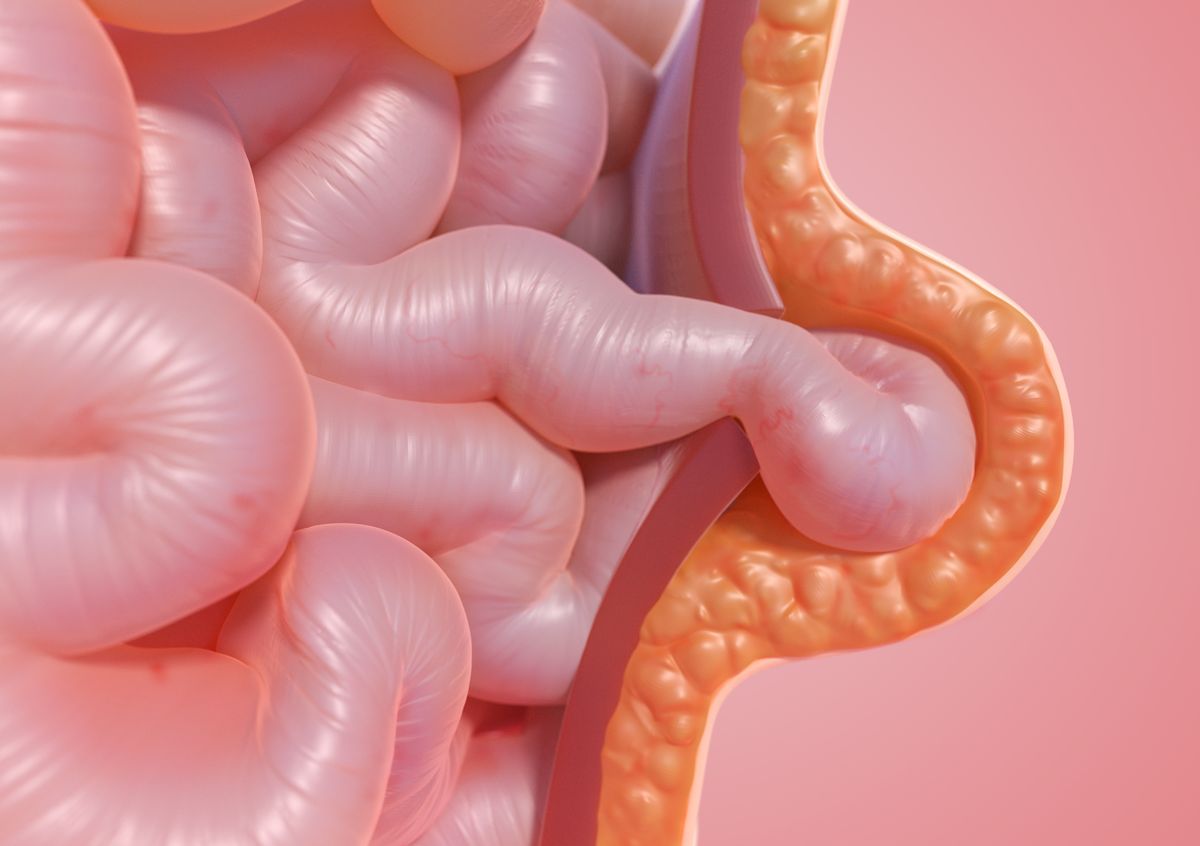
A hernia occurs when an internal organ or tissue pushes through a weak spot in the surrounding muscle or connective tissue wall. Think of it like a small hole in a fabric — when pressure is applied, the inner content starts to push through that gap, forming a visible bulge.
The herniation definition in simple terms is: the protrusion of an organ or part of an organ through the wall of the cavity that normally contains it.
Hernias most commonly develop in the abdomen, but they can also appear in the groin, belly button, and upper thigh areas. In some cases, they develop at the site of a previous surgical cut.
Common causes of hernia include:
- Heavy lifting without proper technique
- Chronic coughing or sneezing
- Obesity or excess body weight
- Constipation and straining during bowel movements
- Pregnancy, which increases pressure on the abdominal wall
- Previous abdominal surgeries
- Ageing and weakening of muscles over time
Hernias do not go away on their own. Without proper treatment, they tend to grow larger and can lead to serious complications.
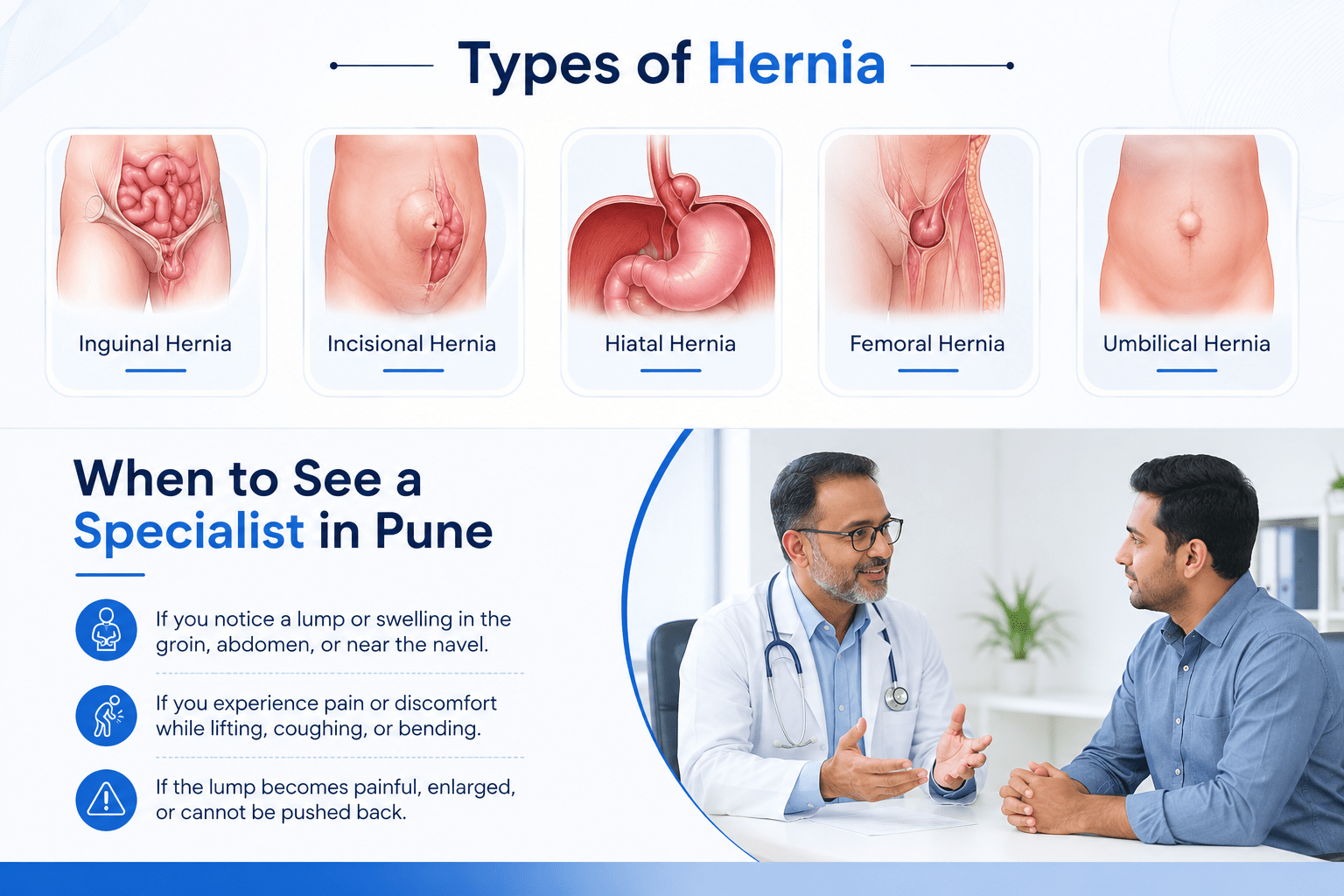
Different Types of Hernia:
1. Inguinal Hernia:
Inguinal hernia is the most common type of hernia, accounting for nearly 70–75% of all hernia cases. It occurs when part of the intestine or fatty tissue pushes through a weak spot in the lower abdominal wall, specifically into the inguinal canal in the groin area.
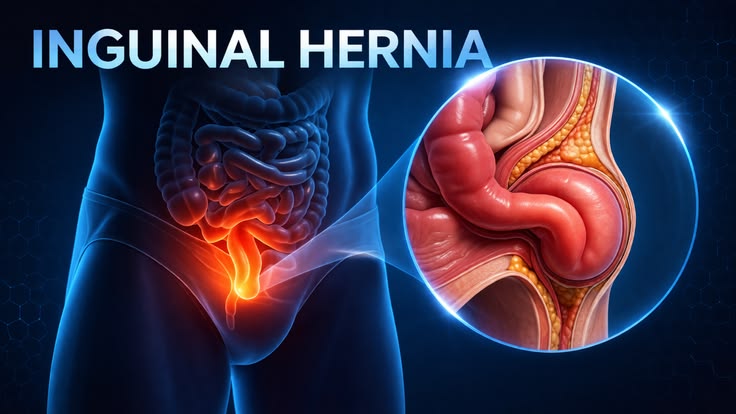
Who is affected? Inguinal hernias are far more common in men than women because men have a natural weakness in the inguinal canal due to the pathway through which the testicles descend during foetal development.
Symptoms of Inguinal Hernia:
- A visible bulge on one or both sides of the pubic bone
- Pain or discomfort in the groin, especially when bending, coughing, or lifting
- A feeling of heaviness or a dragging sensation in the groin
- Pain and swelling around the testicles in men
Important note: An inguinal hernia can become dangerous if the tissue gets trapped (incarcerated) or if the blood supply is cut off (strangulated), which requires emergency surgery.
2. Umbilical Hernia:
An umbilical hernia forms when part of the intestine or fatty tissue pushes through the abdominal wall near the belly button (navel). It is very common in infants — especially premature babies — and usually closes on its own within the first few years of life. However, when it persists into adulthood or develops in adults, surgical repair is recommended.
Who is affected? In adults, umbilical hernias are more common in women, especially those who have had multiple pregnancies, are overweight, or have had abdominal surgeries.
Symptoms of Umbilical Hernia:
- A soft swelling or bulge near the belly button
- The bulge may become more noticeable when coughing, laughing, or straining
- Mild discomfort or pain around the navel area
- In infants, the bulge is usually painless
Key fact: Small umbilical hernias in babies often resolve on their own by age 4–5. In adults, surgery is usually required.
3. Incisional Hernia:
An incisional hernia develops through a scar from a previous abdominal surgery. When the abdominal wall does not heal properly after an operation, the muscles become weak at the incision site, allowing tissue or intestine to push through.
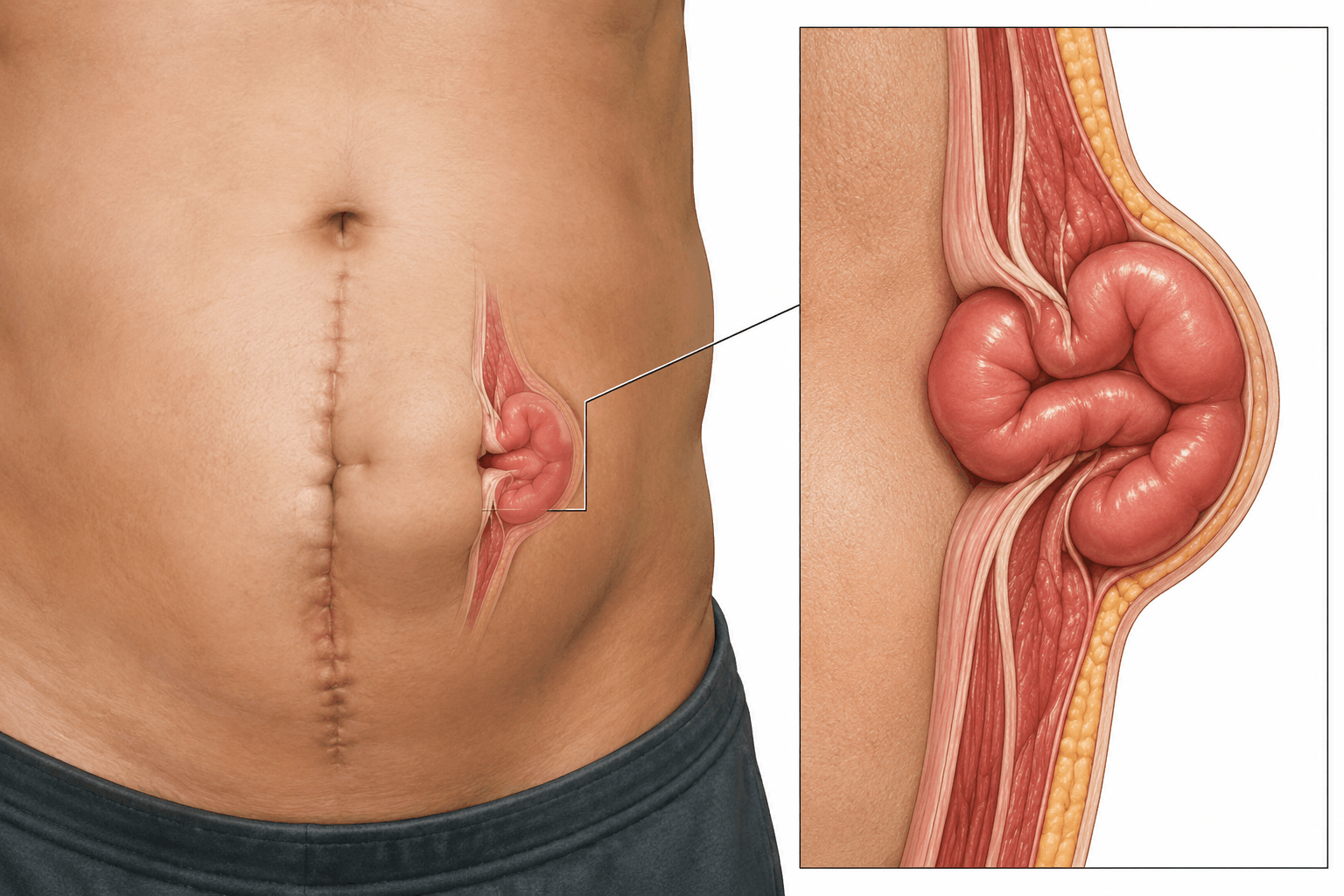
Who is affected? Anyone who has had an abdominal operation — such as appendix removal, C-section, gallbladder surgery, or bowel surgery — is at risk of developing an incisional hernia, particularly if they:
- Are you obese or overweight
- Develop wound infection after surgery
- Resume heavy physical activity too soon after surgery
- Have nutritional deficiencies
Symptoms of Incisional Hernia:
- A visible bulge along or near a previous surgical scar
- Pain or tenderness at the site, especially when standing or lifting
- Discomfort that worsens with physical activity
- Nausea in severe cases if the bowel is involved
Important: Incisional hernias tend to grow larger over time and rarely resolve without surgery. The larger the hernia, the more complex the repair becomes, so early treatment is advisable.
4. Hiatal Hernia:
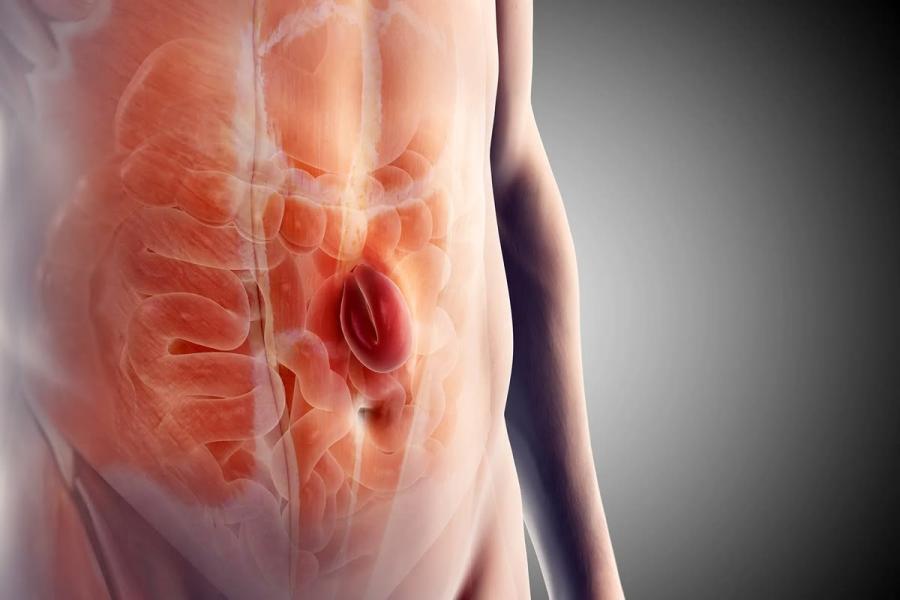
A hiatal hernia is a bit different from the rest — it does not cause a visible bulge on the outside. Instead, it occurs when the upper part of the stomach pushes up through the diaphragm (the muscle separating the chest from the abdomen) and into the chest cavity through a small opening called the hiatus.
Who is affected? Hiatal hernias are most commonly found in people over the age of 50, those who are overweight, and pregnant women. They are often discovered during investigations for persistent acidity or chest discomfort.
Two main types:
- Sliding Hiatal Hernia — The most common form; the stomach slides in and out of the chest area
- Paraesophageal Hiatal Hernia — Less common but more serious; part of the stomach gets stuck beside the oesophagus
Symptoms of Hiatal Hernia:
- Frequent heartburn and acid reflux (GERD)
- Chest pain or discomfort, especially after eating
- Difficulty swallowing
- Belching and bloating
- Regurgitation of food or liquid into the mouth
- Feeling full quickly after eating
Note: Many people with small hiatal hernias have no symptoms at all. Treatment ranges from lifestyle changes and medications to surgery in serious cases.
5. Femoral Hernia:
A femoral hernia occurs when fatty tissue or part of the intestine protrudes through the femoral canal — a passage near the top of the inner thigh, just below the groin. Although less common than inguinal hernias, femoral hernias are considered more dangerous because they have a high risk of strangulation.
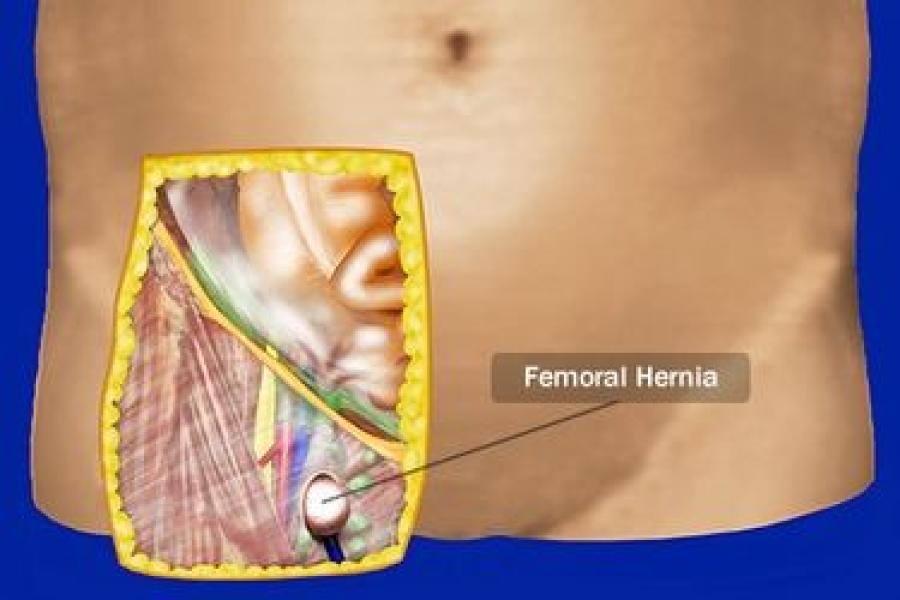
Who is affected? Femoral hernias are far more common in women, particularly older women, due to the wider shape of the female pelvis.
Symptoms of Femoral Hernia:
- A small bulge in the upper inner thigh or groin area
- Discomfort or pain that worsens when standing, moving, or straining
- The bulge may not always be easy to see, especially in overweight individuals
- Sudden severe pain if the hernia becomes strangulated
Warning: Femoral hernias carry a higher risk of becoming strangulated compared to other types. Surgery is typically recommended promptly after diagnosis, even if symptoms are mild.
Common Symptoms of Hernia:
While each type of hernia has its own specific signs, there are several symptoms that are common across most hernias:
- Visible bulge or lump in the abdomen, groin, or belly button that may push back in when lying down
- Pain or discomfort at the site of the bulge, especially when bending, coughing, or lifting heavy objects
- Aching or burning sensation around the affected area
- Feeling of pressure or heaviness in the abdomen or groin
- Nausea or vomiting in complicated or severe cases
- Sudden increase in pain, which may indicate a serious complication
When Should You See a Hernia Specialist in Pune?
Not every hernia is an emergency, but all hernias deserve medical evaluation. Here is when you should see a specialist without delay:
- You notice a new bulge anywhere on your abdomen, groin, or belly button area
- The bulge is getting larger or more uncomfortable over time
- You feel pain or discomfort during everyday activities like walking, lifting, or even coughing
- The bulge cannot be pushed back into place when you lie down
- You have sudden, severe pain at the hernia site — this is a medical emergency
- You feel nauseous, vomit, or are unable to pass gas — signs of a blocked or strangulated hernia
- The skin over the bulge turns red, purple, or dark — indicating a serious complication requiring emergency care
A strangulated hernia is a life-threatening condition where the blood supply to the trapped tissue is cut off. It requires immediate surgery. Do not wait or self-medicate if you experience sudden, intense pain at a hernia site.
Treatment Options: Open, Laparoscopic & Robotic Surgery
Hernia surgery in Pune has advanced significantly in recent years. Depending on the type, size, and location of the hernia, as well as your overall health, there are three main surgical options:
1. Open Hernia Surgery: The surgeon makes a single incision near the hernia site, pushes the protruding tissue back into place, and repairs the weakened muscle wall — often reinforcing it with a surgical mesh. This remains a reliable option for many types of hernias.
2. Laparoscopic Hernia Surgery: The laparoscopic surgeon uses a thin camera (laparoscope) and small instruments inserted through tiny cuts to repair the hernia. Benefits include:
- Less post-operative pain
- Shorter hospital stay
- Faster recovery
- Minimal scarring
- Lower risk of infection
3. Robotic Hernia Surgery: The most advanced approach, where the surgeon operates using a robotic system with greater precision and control. It is particularly useful for complex or recurrent hernias and offers excellent outcomes with minimal trauma to surrounding tissues.
For Hernia Surgery in Pune, the choice of procedure is made after a thorough evaluation of the patient’s condition. Minimally invasive approaches — laparoscopic and robotic — are preferred whenever suitable, as they offer quicker recovery and better comfort.
Why Choose Dr. Lalit Banswal for Hernia Treatment in Pune?
When it comes to finding a trusted and experienced Hernia Surgeon in Pune, Dr. Lalit Banswal stands out as one of the most preferred specialists in the region. Here is why patients across Pune and nearby areas choose him:
- 15+ Years of Surgical Experience with over 10,000 complex surgeries performed
- Expert in Laparoscopic and Robotic Hernia Surgery — offering minimally invasive, precise care
- Available at Sai Vedant Multi Speciality Hospital, Undri, and other leading hospitals across Pune, including Nobel Hospital (Hadapsar) and Harsh Hospital (Kondhwa)
- Patient-First Approach — clear communication, transparent pricing, and personalised treatment plans
- Specialisation in Complex and Recurrent Hernias — handling even the most challenging cases with confidence
- Recognised by Peers — MMC-accredited speaker at oncology and surgical conferences
- Affordable and Transparent Hernia Surgery Costs — guiding patients through every step, including insurance assistance
Whether you live in Undri, Hadapsar, Kondhwa, NIBM, or anywhere in Pune, expert hernia care is accessible and close to you.
Conclusion:
A hernia may start small and painless, but it rarely stays that way. Understanding the different types of hernia — inguinal, umbilical, incisional, hiatal, and femoral — helps you recognise the warning signs early and take action before complications arise. Whether you have just noticed a bulge or have been living with discomfort for a while, the right time to consult a specialist is now.
Do not wait for a hernia to become an emergency. Book your consultation today with Dr. Lalit Banswal at Sai Vedant Multi Speciality Hospital, Pune, and take the first step towards a pain-free, healthy life.
📞 Call: 9158050180
FAQs About Types of Hernia:
No, a hernia cannot heal on its own. The weakened muscle wall does not repair itself without surgical intervention. While small hernias can be monitored, surgery is the only permanent solution. Delaying treatment increases the risk of serious complications such as strangulation.
Seek emergency care if you experience sudden, severe pain at the hernia site, nausea, vomiting, inability to pass gas, or if the bulge turns red or dark in colour. These are signs of a strangulated or obstructed hernia, which is a medical emergency.
The cost of hernia surgery in Pune varies depending on the type of surgery (open, laparoscopic, or robotic), the hospital, and the complexity of the case. Most health insurance plans do cover hernia surgery. It is best to consult your surgeon and insurance provider for an accurate estimate. Dr. Lalit Banswal offers transparent pricing and guidance on insurance claims at Sai Vedant Multi-Speciality Hospital.
Laparoscopic surgery is generally preferred for most hernias as it offers less pain, smaller cuts, faster recovery, and minimal scarring compared to open surgery. However, the best approach depends on the type and complexity of your hernia. Your surgeon will recommend the most suitable method after proper evaluation.
Recovery after laparoscopic hernia surgery typically takes 1 to 2 weeks for light activities. Full recovery, including strenuous physical work, may take 4 to 6 weeks. Open surgery may require a slightly longer recovery period. Following your surgeon’s post-operative instructions is essential for smooth healing.
For desk or light office work, most patients can return within 7 to 10 days after laparoscopic surgery. For physically demanding jobs involving lifting or heavy activity, a rest period of 4 to 6 weeks is recommended. Dr. Lalit Banswal’s team provides personalised recovery plans based on each patient’s job profile and health condition.