
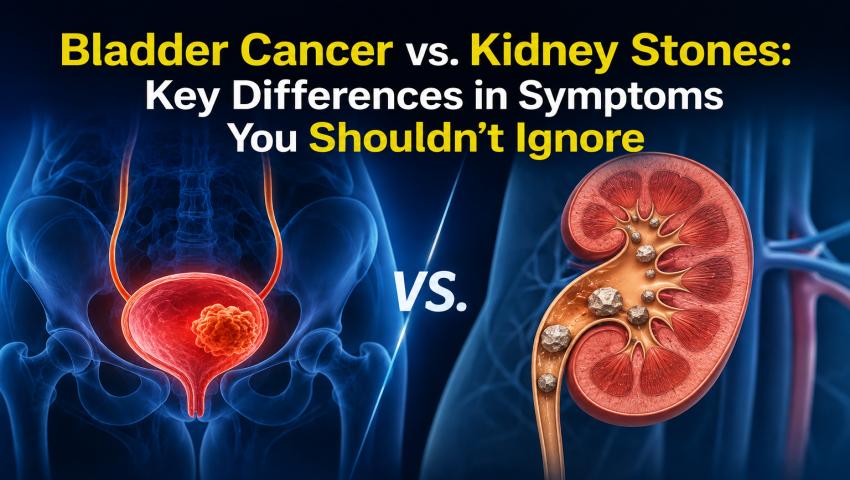
While both bladder cancer and kidney stones cause urinary changes and blood in the urine, they are vastly different conditions. Kidney stone pain is usually sudden, sharp, and severe in the back or side (flank pain), accompanied by painful urination. In contrast, bladder cancer symptoms often start quietly with painless blood in the urine (painless hematuria) and persistent bladder irritation. Knowing these distinctions ensures you seek medical evaluation from a Cancer Specialist like Dr. Lalit Banswal at the earliest sign.
Understanding the Confusion: Why Bladder Cancer and Kidney Stones Feel Similar?
It is remarkably common for patients to confuse bladder cancer Vs. kidney stones because both conditions directly affect the urinary tract. When something irritates your kidneys, ureters, or urinary bladder, your body signals trouble through a few primary channels: pain, changes in how often you urinate, and visible blood in the urine.
Because these overlapping symptoms feel alarming, many individuals initially assume they simply have a painful urinary tract infection (UTI) or a small kidney stone that will pass on its own. However, mistaking early warning signs of bladder cancer for a routine stone can delay crucial medical treatment.
The Overlapping Symptoms of Urinary Tract Conditions:
Both conditions can trigger the following symptoms:
- Hematuria (blood in urine): Urine that appears pink, red, or cola-colored.
- Dysuria and urinary frequency: Burning or discomfort during urination along with an urgent need to empty your bladder more often.
- Lower abdominal pain or pelvic discomfort: General aching or pressure in the lower belly region.
Why Early and Accurate Diagnosis Matters?
While a kidney stone is a non-cancerous mineral deposit that can usually be broken down or passed, bladder cancer involves abnormal cell growth within the bladder lining. Early-stage bladder cancer is highly treatable, but its symptoms often mimic benign conditions. Consulting an experienced surgical oncologist like Dr. Lalit Banswal ensures that underlying causes are identified quickly through precise urological cancer screening and imaging.
What Are Kidney Stones?
Kidney stones (renal calculi) are hard mineral and salt deposits that form inside your kidneys. They develop when urine becomes overly concentrated, allowing minerals like calcium, oxalate, and uric acid to crystallize and stick together.
Typical Symptom Onset and Pain Characteristics:
Kidney stone pain is notorious for being sudden, intense, and fluctuating. As the stone moves through your narrow ureters toward the bladder, it blocks urine flow and causes the kidney to swell, resulting in severe, sharp spasms known as renal colic.
Common Symptoms of Kidney Stones:
- Sharp flank pain: Intense pain in the back and side, below the ribs, that radiates to the lower abdomen and groin.
- Painful urination: Severe burning or sharp discomfort when passing urine.
- Pain that comes in waves: Fluctuating pain intensity that moves as the stone shifts location.
- Nausea and vomiting: Caused by shared nerve networks between the kidneys and digestive tract.
- Foul-smelling or cloudy urine: Often indicating an accompanying urinary infection or heavy mineral buildup.
What Is Bladder Cancer?
Bladder cancer begins in the urothelial cells that line the inside of the urinary bladder. It is one of the most common urological cancers and is strongly linked to factors such as industrial chemical exposure, chronic bladder inflammation, and cigarette smoking.
The Subtle and Progressive Nature of Bladder Cancer Symptoms:
Unlike the sudden onset of kidney stones, bladder cancer typically develops slowly over months. In its earliest stages, it may cause no physical pain at all, which is why early warning signs of bladder cancer are frequently overlooked or misdiagnosed as minor bladder infections.
Key Warning Signs of Bladder Cancer:
- Painless hematuria: Noticing blood in your urine without any accompanying burning or severe pain.
- Persistent urinary urgency: Constantly feeling the need to urinate, even right after emptying the bladder.
- Increased urinary frequency: Needing to urinate significantly more times during the day and night.
- Pelvic pressure or discomfort: A persistent, dull ache in the lower abdomen or pelvic bowl in later stages.
Key Differences in Symptoms: Bladder Cancer vs. Kidney Stones
To help you understand how to tell the difference between bladder cancer and kidney stones, it helps to compare how their symptoms manifest across five critical categories:
1. Type and Intensity of Pain (Sharp/Colicky vs. Dull/Absent):
- Kidney Stones: Pain is excruciating, sharp, and colicky. It starts suddenly in the lower back or side (flank pain) and spreads toward the belly and groin.
- Bladder Cancer: Early-stage bladder cancer rarely causes sharp pain. Patients typically report no pain at all, or merely a mild, chronic pelvic discomfort as the tumor grows.
2. Blood in Urine (Visible Painful Hematuria vs. Painless Hematuria):
- Kidney Stones: Blood in urine kidney stone cases is almost always paired with severe pain or burning during urination as the jagged stone scratches the urinary lining.
- Bladder Cancer: Painless hematuria bladder cancer is the primary cardinal sign. You may notice bright red, pink, or rusty-brown urine one day, and clear urine the next, without feeling any physical discomfort.
3. Urinary Changes (Urgency, Frequency, Burning Sensation):
- Kidney Stones: Causes sudden, sharp burning during urination (dysuria), especially when the stone lodges near the junction where the ureter enters the bladder.
- Bladder Cancer: Irritates the bladder wall continuously, leading to chronic urinary frequency and an constant urge to urinate, even when your bladder holds very little fluid.
4. Duration and Progression of Symptoms:
- Kidney Stones: Symptoms are acute. Once the stone passes out of the urinary tract or is surgically broken down, the pain and bleeding stop almost immediately.
- Bladder Cancer: Symptoms are progressive and ongoing. Bleeding may come and go intermittently, but urinary irritation steadily worsens over time without targeted treatment.
5. Systemic Symptoms (Unexplained Weight Loss, Fatigue, Loss of Appetite):
- Kidney Stones: Systemic signs are usually limited to nausea, vomiting, fever, or chills (if a blockage leads to a kidney infection).
- Bladder Cancer: Advanced stages can cause systemic oncological signs, including unexplained weight loss, chronic fatigue, bone pain, and loss of appetite.
Comparison Summary: Bladder Cancer vs. Kidney Stones at a Glance
The following side-by-side comparison breaks down the key clinical differences between these two conditions:
When Should You See a Cancer Specialist or Surgical Oncologist?
You should never self-diagnose blood in your urine or assume it is merely a harmless urinary stone or infection. Seeking a timely consultation with a surgical oncologist like Dr. Lalit Banswal ensures an accurate diagnosis and protects your urological health.
Red-Flag Symptoms That Require Immediate Medical Attention:
Schedule an urgent appointment if you experience any of the following:
- Any episode of painless blood in the urine, even if it clears up on its own the next day.
- Blood clots in your urine.
- Persistent urinary burning or frequency that does not resolve after completing a course of antibiotics.
- Severe lower abdominal pain or pelvic pain accompanied by unexplained weight loss.
- Recurrent urinary symptoms despite a negative test for kidney stones or urinary tract infections.
How Are Kidney Stones and Bladder Cancer Diagnosed?
Differentiating between a stone and a bladder growth requires specialized diagnostic imaging and clinical procedures.
Diagnostic Steps for Kidney Stones:
- Non-Contrast CT Scan: The gold standard for identifying the exact size, location, and density of kidney stones throughout the renal system.
- Kidney & Bladder Ultrasound: Uses sound waves to detect blockages or swelling in the kidneys (hydronephrosis).
- Urinalysis: Checks urine for red blood cells, calcium crystals, and signs of bacterial infection.
Diagnostic Steps for Bladder Cancer:
- Cystoscopy: A specialized procedure where a thin, lighted scope is inserted into the bladder through the urethra to visually inspect the bladder lining for tumors or lesions.
- Urine Cytology: Microscopic examination of a urine sample to look for abnormal or cancerous cells.
- CT Urogram or MRI: High-resolution contrast imaging that evaluates the entire upper and lower urinary tract for tumors in the bladder, ureters, or kidneys.
Expert Urological Cancer Care with Dr. Lalit Banswal:
When dealing with complex urological conditions, receiving care from a highly trained specialist is essential. Dr. Lalit Banswal is a distinguished cancer specialist in Pune and an experienced surgical oncologist with over 20 years of expertise in performing complex and minimally invasive surgeries.
As the Chief Cancer Surgeon at Sai Vedant Multi Speciality Hospital in Undri, Pune, and a panel consultant surgical oncologist at major corporate hospitals including Ruby Hall Clinic Wanowrie and Noble Hospital, Dr. Lalit Banswal provides comprehensive diagnostic, surgical, and oncological care.
Comprehensive Diagnostic & Minimally Invasive Surgical Care:
- Accurate Oncological Diagnosis: Advanced screening, cystoscopic evaluations, and precise tumor staging.
- Minimally Invasive Surgeries: Expertise in laparoscopic and robotic surgical techniques for prostate, kidney, and bladder cancers, allowing for faster recovery, less pain, and minimal scarring.
- Patient-Centered Approach: Dedicated to compassionate, ethical practice and individualized treatment plans tailored to each patient’s unique health needs.
FAQs About Bladder Cancer vs. Kidney Stones:
Yes. Bladder cancer, kidney stones, and UTIs all share similar symptoms, such as blood in the urine, burning during urination, and frequent urges to urinate. However, bladder cancer symptoms tend to be painless in early stages, whereas kidney stones cause acute pain and UTIs typically respond quickly to antibiotics.
The most common early warning sign of bladder cancer is painless hematuria (blood in the urine). The urine may range in color from pale pink to deep red. It often occurs intermittently—appearing one day and disappearing for weeks—leading many patients to delay seeking medical care.
No. Kidney stone pain comes in sudden, intense waves (renal colic) that shift as the stone moves through the urinary tract. In contrast, bladder cancer does not produce sharp, wave-like pain; any discomfort associated with bladder cancer is usually a steady, dull pelvic ache that slowly worsens over time.
No, kidney stones do not directly convert into cancer cells. Kidney stones are solid mineral formations, whereas cancer is driven by genetic mutations in cellular growth. However, long-term chronic urinary tract irritation or recurrent infections caused by persistent stones should always be monitored by a doctor.
You should schedule an evaluation with Dr. Lalit Banswal if you observe unexplained blood in your urine, experience ongoing bladder irritation that fails to respond to standard medical treatments, or have persistent pelvic discomfort. Early consultation ensures prompt testing to rule out or treat urological cancers effectively.
Take Charge of Your Health: If you or a loved one are experiencing persistent urinary symptoms or blood in your urine, do not wait for the symptoms to pass. Consult with Dr. Lalit Banswal, leading Surgical Oncologist in Pune, at Sai Vedant Multi Speciality Hospital, Undri, or Ruby Hall Clinic, Wanowrie, for an accurate diagnosis and expert care.