
The Evolution of Abdominal Surgery: From Open to Robotic
For decades, traditional open surgery was the primary method used to treat serious internal issues. While effective, it required long incisions that left large scars and caused significant physical trauma to the body. The introduction of laparoscopy introduced keyhole abdominal surgery, allowing doctors to work through tiny incisions using long instruments and specialized cameras. Today, modern technology has evolved even further. Patients seeking advanced treatments now turn to robotic gastrointestinal surgery Pune as the ultimate precision tool for complex abdominal cases. Guided by the expert hands of Dr. Lalit Banswal, this new era of surgery transforms major procedures into accurate, minimally invasive treatments.
Defining "Complex" Abdominal Conditions:
A complex abdominal condition involves deep-seated tumors, severe organ damage, or tricky structural issues within the digestive tract and abdominal wall. These are not basic or standard operations. They involve critical regions like the stomach, pancreas, liver, and colon, where large blood vessels and essential nerves live close together. Dealing with advanced gastrointestinal malignancy, deep pelvic tumors, or recurring hernias requires advanced laparoscopic vs robotic surgery systems that allow an operating surgeon to work safely inside tightly packed areas without disturbing surrounding tissues.
What Makes Robotic Surgery Different?
How the Robot Assists the Surgeon? (It Doesn't Operate Independently)
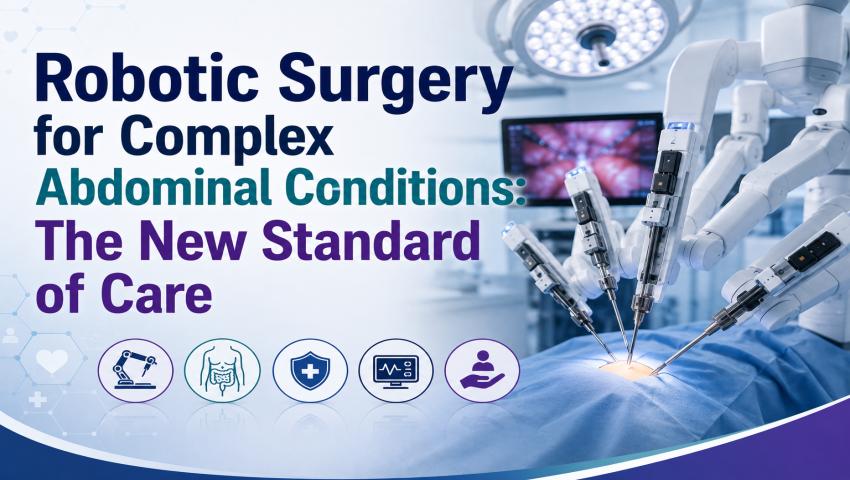
A common misconception is that the machine performs the operation on its own. In reality, the equipment cannot make choices or move without direct human command. During a procedure, Dr. Lalit Banswal sits comfortably at a high-tech master console just a few feet away from the patient. Every tiny turn of the doctor’s fingers is translated in real-time into exact, scaled movements of the robotic arms inside the patient. The technology functions purely as an extension of the doctor’s unmatched physical skill, eliminating natural hand tremors and boosting technical capabilities.
The 3D High-Definition Advantage:
Standard laparoscopic cameras display a flat, two-dimensional image on a standard wall monitor, which makes depth perception difficult during deep tissue work. The robotic setup solves this issue by using an advanced camera system that delivers a magnified, crystal-clear 3D high-definition visualization directly to the console display. This lets Dr. Lalit Banswal see internal structures with incredible depth and clarity, making it easier to distinguish healthy tissues from diseased sections.
Precision and EndoWrist Instrument Flexibility:
Human hands are naturally limited by the shape of our wrists and fingers when working through a small surgical opening. The specialized instruments used in robotic platforms feature patented EndoWrist technology. These tiny tools possess a range of motion greater than the human wrist, allowing them to bend, twist, and turn in microscopic angles inside the body. This unparalleled dexterity helps Dr. Lalit Banswal navigate difficult corners of the abdomen easily, ensuring precise tumor removal during delicate oncology operations.
Complex Abdominal Conditions Treated Robotically:
Advanced Gastrointestinal (GI) Malignancies:
Cancers affecting the digestive system demand deep thoroughness to eliminate malignant cells while protecting healthy organ functions. Through robotic gastrointestinal surgery Pune, complex conditions across the digestive tract receive highly specialized treatment. Dr. Lalit Banswal treats a wide variety of digestive conditions, including:
- Esophageal and Stomach Cancers: Precise resections near major blood vessels.
- Robotic Colectomy: Safe, targeted removal of diseased colon segments with minimal disruption.
- Deep Rectal Dissections: Navigating narrow structural pathways within the lower pelvic bone floor.
Hepato-Pancreato-Biliary (HPB) Disorders:
The liver, pancreas, and gallbladder form an intricate network that is traditionally dangerous to operate on due to high bleeding risks.
- Robotic Whipple Surgery: A highly complex operation to remove the head of the pancreas, which requires micro-precise stitching to reconnect the digestive system safely.
- Robotic Liver Resection: Removing tumors from the liver structure while minimizing blood loss.
- Robotic Cholecystectomy for Complex Gallstones: Safely taking out severely inflamed or impacted gallbladders that standard tools cannot safely reach.
Complex Reconstructive Abdominal Wall Hernias:
When a patient suffers from massive or failed recurring hernias, the structural muscles of the core need deep physical repair. Using robot-assisted abdominal wall reconstruction, Dr. Lalit Banswal can meticulously separate muscle layers and perform a complex hernia repair robotic mesh placement deep inside the tissue beds. This repairs the core wall structure from the inside out, providing lasting support through tiny incisions and lowering the chances of the hernia returning.
Total Robotic Mesorectumectomy for Rectal Cancers:
Treating low rectal cancer requires an intricate procedure known as total robotic mesorectumectomy. The surgeon must completely remove the rectal tumor along with its surrounding fatty tissue envelope, where lymph nodes reside. Doing this inside the tight pelvic cavity is challenging. The robotic system allows Dr. Lalit Banswal to carefully detach the tissue while fully preserving the delicate nerves that control urinary and sexual functions, vastly improving long-term quality of life.
Key Benefits Over Traditional Open & Laparoscopic Surgery:
Minimal Blood Loss and Reduced Transfusion Risks:
Large open incisions generally cause significant bleeding, often requiring blood transfusions during major abdominal procedures. The micro-controlled precision of robotic tools allows for incredibly neat tissue separation, sealing tiny vessels instantly during the operation. This translates to minimal blood loss and keeps the patient’s overall vital systems highly stable.
Shorter Hospital Stays and Faster Return to Normal Life:
Because the robot operates through tiny keyhole access entries rather than cutting wide muscle sheets, the body heals at a significantly accelerated pace. Patients undergoing robotic operations routinely experience a shorter hospital stay, often going home within a couple of days. Residual pain and recovery time are drastically reduced, allowing individuals to resume their work, families, and everyday lifestyles weeks faster than traditional methods allow.
Lower Post-Operative Infection and Incision Complication Rates:
Large open wounds are highly vulnerable to bacterial infections, fluid accumulation, or separation along the stitched edges. Minimally invasive robotic entry spots heal quickly with minimal scarring. By utilizing precise movement pathways, the system lowers tissue bruising, leading to fewer post-operative wound complications and lower long-term risks, such as anastomotic leak risks in delicate digestive reconnections.
The Patient Journey: What to Expect?
Pre-Surgical Assessment and Eligibility Criteria:
Not every abdominal issue requires or qualifies for a robotic approach. The journey begins with a comprehensive, individualized evaluation by Dr. Lalit Banswal to check the patient’s general fitness, tumor size, and medical history. Detailed imaging scans are reviewed to plan out the precise entry locations for the robotic instruments.
The Day of Surgery: In the Operating Room
- The clinical team administers general anesthesia, ensuring the patient is asleep and pain-free.
- The surgical team makes small, keyhole incisions in the abdomen to place thin tubes called trocars.
- The robotic arms are safely attached to these entry tubes under direct vision.
- Dr. Lalit Banswal sits at the master console, controlling every movement with extreme precision via the 3D high-definition view.
- Once the problem area is repaired or removed, the instruments are withdrawn, and the tiny openings are closed with small stitches.
The Recovery Timeline: Weeks vs. Months
The recovery phase after a robotic operation is significantly easier on the body than traditional open surgery. Most patients can walk around comfortably within twenty-four hours of their operation. While an open surgery can take two to three months to fully heal, post-operative recovery robotic GI surgery allows patients to feel strong and return to light activities within two to three weeks.
Why Choose Dr. Lalit Banswal for Robotic Abdominal Care in Pune?
1. 20+ Years of Experience and 20,000+ Complex Surgeries:
When dealing with dangerous abdominal conditions, experience is irreplaceable. Dr. Lalit Banswal brings more than twenty years of medical clinical excellence, having successfully performed over twenty thousand complex surgeries. This deep baseline of anatomical knowledge ensures safe patient management, even when facing unexpected challenges during an operation.
2. Specialized Fellowship Training from Tata Cancer Centre:
True surgical mastery requires specialized education. Dr. Lalit Banswal refined his specialized skills by completing a prestigious Fellowship in Surgical Oncology at the world-renowned Tata Cancer Centre in Kolkata. This elite training provides him with an exceptional understanding of advanced cancer behaviors and modern organ-preservation techniques.
3. Access to Leading Corporate Infrastructure in Pune:
To ensure top-tier safety and clinical outcomes, Dr. Lalit Banswal performs surgeries across Pune’s premier corporate medical networks. Patients can access his specialized skills at leading facilities, including:
- Sai Vedant Multi-Speciality Hospital, Undri
- Ruby Hall Clinic, Wanowrie
- Noble Hospitals and Research Centre, Hadapsar
Conclusion:
Embracing Innovation for Better Surgical Outcomes:
Robotic surgery represents a massive leap forward in modern medicine. By combining advanced computer precision with the extensive clinical experience of a master surgeon, patients no longer have to endure the pain and long recovery times of traditional open surgeries. Complex diseases within the abdomen can now be treated safely, accurately, and with excellent long-term success.
Book a Consultation with Dr. Lalit Banswal:
If you or a family member are dealing with a complex gastrointestinal issue, severe hernia, or an abdominal malignancy, exploring advanced treatment options is the first step toward healing. Contact our team today to review your medical files and book a personalized robotic surgery evaluation with Dr. Lalit Banswal.
You can reach us directly at +91 9158050180 to schedule your appointment.
Frequently Asked Questions:
Yes, robotic surgery is highly safe and effective for treating aggressive or complex abdominal cancers when managed by an expert like Dr. Lalit Banswal. The 3D high-definition visualization provides clear visibility of the surgical site, allowing for precision tumor removal abdomen while safely avoiding major blood vessels and healthy tissues. This minimizes the risk of complications and ensures a thorough cleanout of malignant cells.
While both are minimally invasive keyhole options, advanced laparoscopic vs robotic surgery systems offer significant differences in control and vision. Standard laparoscopy uses rigid, straight tools and a flat 2D screen. Robotic surgery gives the operating surgeon a magnified 3D view and flexible EndoWrist instruments that bend like a human hand. This extra dexterity makes robotic surgery far superior for deep pelvic work, intricate stitching, and managing complicated internal anatomies.
No, the surgical robot cannot move, make decisions, or perform any action independently. Every single step of the operation is completely directed by Dr. Lalit Banswal. The robot acts as a highly advanced instrument holder that perfectly mimics the doctor’s hand movements on the console, ensuring absolute precision and control.
The post-operative recovery robotic GI surgery timeline is much faster than traditional open surgery. Most patients can sit up, eat, and walk around within twenty-four hours. While an open surgery could require months of healing, robotic surgery patients generally return to their normal daily routines and light activities within two to three weeks.
No, you will not have large, unsightly scars. One of the main benefits of choosing robotic gastrointestinal surgery in Pune is that the entire procedure is performed through a few tiny keyhole incisions rather than one large cut. These tiny entry spots heal very quickly, leaving minimal long-term marking on your skin.
Like all surgical procedures, robotic operations carry minor baseline risks such as temporary bleeding, swelling, or reactions to anesthesia. However, because of the enhanced precision of the robotic arms, the risk of serious complications like heavy blood loss, deep tissue infections, or anastomotic leak risks is lower compared to traditional open abdominal surgery.
Dr. Lalit Banswal operates at several premier hospitals equipped with the latest surgical technologies across Pune. Patients can schedule their robotic procedures under his direct care at Sai Vedant Multi-Speciality Hospital in Undri, Ruby Hall Clinic in Wanowrie, and Noble Hospitals and Research Centre in Hadapsar
