
Triple-Positive Breast Cancer is a unique and highly treatable subtype of breast cancer where the tumor cells test positive for three distinct biological drivers: estrogen receptors, progesterone receptors, and HER2 proteins. Because of its specific biological composition, this cancer responds exceptionally well to a combination of hormone-blocking therapies, anti-HER2 targeted treatments, and surgical interventions. Dr. Lalit Banswal evaluates individual biomarker results, staging parameters, and recurrence risks to design personalized care plans that maximize long-term survival and recovery.
Introduction: Navigating Breast Cancer Subtypes
Receiving a breast cancer diagnosis brings a wave of questions, particularly regarding the specific biological traits of the tumor. Not all breast cancers behave the same way, and understanding what what does triple positive breast cancer mean is vital for mapping out an effective treatment strategy.
When reviewing pathology reports and diagnostic scans at Sai Vedant Multi Speciality Hospital, Dr. Lalit Banswal emphasizes that knowing your tumor’s receptor status is the key to unlocking modern precision medicine. Whether an individual is exploring early detection options through Comprehensive Cancer Screening or seeking guidance on specialized surgical care, understanding this unique subtype helps patients make confident, informed medical decisions.
What Is Triple-Positive Breast Cancer? (Defining the Three Receptors)
To comprehend what is triple-positive breast cancer characteristics, it helps to understand how cells receive growth signals. Normal breast cells have proteins (receptors) that attach to hormones and growth factors, telling the cells when to grow and divide. In Triple-Positive Breast Cancer, the cancer cells make too many of these receptors, driving rapid cell multiplication.
- Estrogen Receptor (ER) Positive Status: The tumor cells rely on the hormone estrogen to fuel their growth.
- Progesterone Receptor (PR) Positive Status: The tumor cells also use the hormone progesterone to stimulate growth and division.
- HER2 Positive Overexpression: The cells produce excess human epidermal growth factor receptor 2 proteins, causing aggressive cell division.
Exploring hormone receptor and HER2-positive breast cancer reveals why this diagnosis requires a multi-pronged therapeutic approach that targets all three pathways simultaneously.
The Dual Nature: Why Triple-Positive Cancer Requires Specialized Care?
Many patients often ask: is triple-positive breast cancer aggressive? Because it involves HER2 gene amplification, the tumor can grow faster than hormone-receptor-only cancers. However, because it also possesses hormone receptors, it responds favorably to endocrine therapy.
This dual nature means that Dr. Lalit Banswal utilizes a specialized combination of therapies. By blocking both hormonal growth signals and HER2 protein pathways, modern oncology successfully neutralizes the aggressive tendencies of these tumors. Furthermore, understanding the underlying estrogen receptor-positive breast cancer therapy protocols ensures that long-term maintenance is managed effectively.
Diagnosing and Staging Triple-Positive Breast Tumors:
Accurate diagnosis is the cornerstone of successful cancer management. When evaluating patients, Dr. Lalit Banswal relies on comprehensive diagnostic workflows to determine the extent of the disease.
Comprehensive Treatment Strategies for Triple-Positive Breast Cancer:
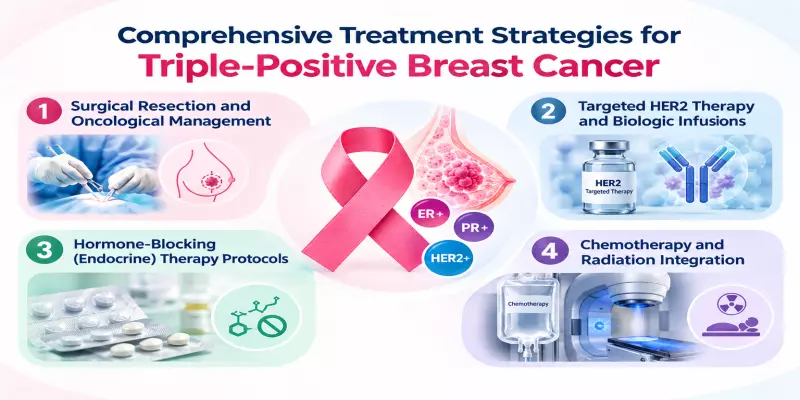
Treating this subtype requires a synchronized approach combining surgery, systemic medications, and targeted therapies. Because multiple growth pathways are active, patients benefit from integrated care models.
1. Surgical Resection and Oncological Management:
The primary local treatment often involves surgical removal of the tumor. Depending on the stage and tumor size, patients may explore various surgical options for hormone-positive breast cancer, ranging from lumpectomies to mastectomies. Achieving clear margins supports a favorable pathological complete response and surgical resection outcome. While managing specialized surgical requirements, Dr. Lalit Banswal also coordinates broader clinical interventions, whether addressing general conditions like Hernia Treatment in Pune, managing vascular health through Varicose Veins Treatment in Pune, or performing minimally invasive procedures like Fistula Treatment in Pune.
2. Targeted HER2 Therapy and Biologic Infusions:
A major breakthrough in treating this subtype is the use of anti-HER2 monoclonal antibodies and other targeted agents. These drugs home in specifically on the HER2 proteins to block growth signals. Incorporating targeted therapy for triple-positive cancer and HER2-positive breast cancer treatment has dramatically improved long-term survival rates.
3. Hormone-Blocking (Endocrine) Therapy Protocols:
To suppress the estrogen and progesterone drivers, patients are prescribed long-term hormone therapy drugs. Utilizing specialized hormone therapy drugs for breast cancer helps block remaining hormonal pathways, significantly lowering the chance of a future relapse.
4. Chemotherapy and Radiation Integration:
For many patients, combining chemotherapy and targeted HER2 drugs before or after surgery shrinks the tumor and eliminates microscopic cancer cells. Radiation therapy is also integrated following breast-conserving surgery to eliminate remaining local cancer cells.
Prognosis, Survival Rates, and Long-Term Outlook:
Thanks to rapid advancements in targeted oncological drugs, the triple-positive breast cancer survival rate has seen remarkable improvements over the last decade. While patients often worry about the complexity of their diagnosis, the outlook is highly encouraging when treatment plans are adhered to strictly.
Long-term prognosis depends on initial staging, overall health, and consistent follow-up care. Under the guidance of Dr. Lalit Banswal, patients receive continuous monitoring to track recovery, manage side effects, and adjust maintenance therapies as needed. Furthermore, addressing multi-system health concerns—such as coordinating care for complex cases or managing related conditions like Colon Cancer Treatment in Pune, Prostate Cancer Treatment in Pune, and Liver Cancer Treatment in Pune—underscores the comprehensive nature of advanced oncological care.
Proactive Survivorship and Follow-Up Care:
Surviving breast cancer involves embracing a proactive lifestyle and maintaining regular surveillance to ensure lasting health.
- Strict Medication Adherence: Continuing daily hormone-blocking pills and scheduled targeted infusions without interruption.
- Routine Oncological Check-Ups: Scheduling regular physical exams and blood work every few months during the initial years.
- Advanced Surveillance Imaging: Undergoing routine mammograms, ultrasounds, or scans as recommended by Dr. Lalit Banswal.
- Healthy Lifestyle Modifications: Maintaining a balanced diet, regular physical activity, and a healthy weight to support immune function.
Conclusion:
Facing a diagnosis of Triple-Positive Breast Cancer can feel overwhelming, but understanding its unique biology reveals a clear path forward with modern medicine. With advanced targeted therapies and expert surgical care, patients can achieve excellent long-term outcomes. To take the next step toward comprehensive oncological evaluation and personalized treatment, schedule your Hospital Appointment & Consultation with Dr. Lalit Banswal at Sai Vedant Multi Speciality Hospital today.
Frequently Asked Questions:
Triple-positive breast cancer is a distinct subtype where cancer cells test positive for estrogen receptors, progesterone receptors, and HER2 protein overexpression. This means the tumor’s growth is driven by both hormones and excessive HER2 protein. Dr. Lalit Banswal analyzes your pathology reports to confirm these specific receptor levels before designing your treatment plan.
The cancer is considered dual-driven because it utilizes two separate biological mechanisms to multiply: hormonal stimulation via estrogen and progesterone, and rapid protein signaling via the HER2 gene amplification. Dr. Lalit Banswal utilizes combination therapies that simultaneously block both of these active growth pathways.
Treatment typically involves a combination of surgery, chemotherapy, anti-HER2 targeted monoclonal antibodies, and long-term hormone-blocking medications. Dr. Lalit Banswal coordinates these advanced therapies to ensure that every active growth driver in the cancer cells is effectively neutralized.
Because multiple targeted therapies are available for its specific receptors, triple-positive breast cancer responds very favorably to modern multimodal oncological care. Dr. Lalit Banswal performs precise surgical resections and integrates targeted drug infusions to achieve the best possible clinical outcomes.
Diagnosis involves core needle biopsies, advanced biomarker testing, and pathological staging to understand the tumor’s exact profile. Dr. Lalit Banswal uses these detailed results to personalize your treatment schedule, combining surgery, targeted biologics, and hormone therapy for optimal recovery.