
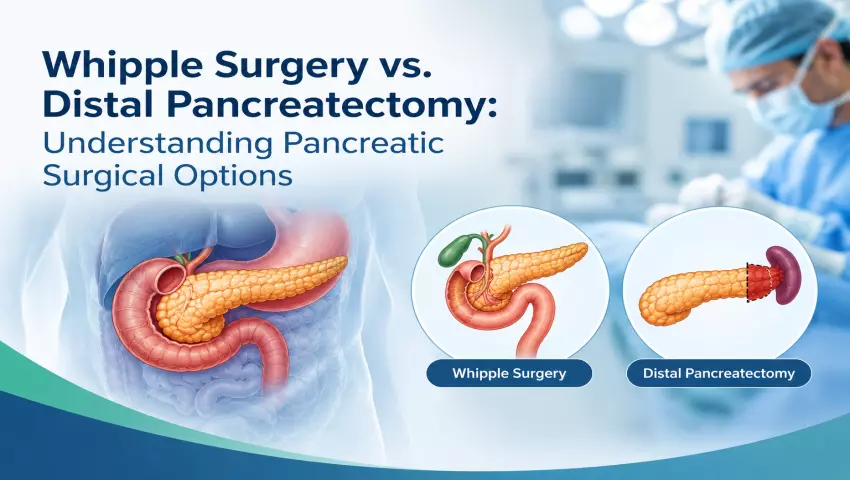
Whipple Surgery vs. Distal Pancreatectomy represents two distinct surgical operations used to remove tumors or lesions located in different parts of the pancreas. A Whipple procedure (pancreaticoduodenectomy) is performed for tumors located in the head or uncinate process of the pancreas and involves removing the pancreatic head, duodenum, gallbladder, and part of the bile duct, followed by complex digestive reconstruction. In contrast, a distal pancreatectomy removes tumors located in the body or tail of the pancreas, frequently along with the spleen, but requires no intestinal reconstruction. Dr. Lalit Banswal evaluates tumor location, diagnostic imaging, and individual health factors at Sai Vedant Multi Speciality Hospital to select the precise surgical path for optimal recovery.
Introduction: Navigating Pancreatic Surgical Options
Facing a diagnosis of a pancreatic tumor, neuroendocrine lesion, or severe chronic pancreatitis can feel overwhelming for patients and their loved ones. When surgical resection is recommended by an oncologist or HPB specialist, understanding the exact nature, scope, and anatomical approach of the operation brings much-needed clarity during a challenging time.
The pancreas is a vital organ situated deep within the abdomen that plays a dual role in digestion and blood sugar regulation. When tumors or precancerous cysts develop, the precise physical location of the growth dictates which surgical procedure is requireExploring the differences between Whipple procedure and distal pancreatectomy empowers patients to understand their treatment journey, surgical complexity, and post-operative expectations. Whether a patient is undergoing early diagnostic evaluations through Comprehensive Cancer Screening or seeking specialized HPB (Hepato-Pancreato-Biliary) surgical care, Dr. Lalit Banswal ensures that every surgical decision is carefully tailored to achieve complete tumor removal while preserving long-term quality of life.
Pancreatic Anatomy: Head, Body, and Tail
To understand why two completely different surgical operations exist for the same organ, it helps to examine the underlying structure of the pancreas. Surgical oncologists and HPB specialists divide the pancreas into three primary anatomical regions:
- The Pancreatic Head & Uncinate Process: Located on the right side of the abdomen, nestled tightly within the C-shaped curve of the duodenum (the first part of the small intestine). The main bile duct passes directly through this section to deliver bile from the liver into the digestive tract.
- The Pancreatic Body: The central section that spans horizontally across the upper abdomen directly behind the stomach.
- The Pancreatic Tail: The narrow left end of the gland that extends toward the spleen and left kidney.
Because tumors in the head affect neighboring digestive structures like the bile duct and duodenum, removing them requires complex reconstructive surgery. Conversely, tumors in the body or tail can be excised without disrupting the digestive tract’s primary plumbing, although they frequently lie close to major splenic blood vessels. Understanding pancreatic head tumor surgery vs body tail resection principles clarifies why anatomical location is the single most important factor in surgical planning.
What Is a Whipple Surgery (Pancreaticoduodenectomy)?
A Whipple procedure, clinically known as a pancreaticoduodenectomy, is one of the most sophisticated operations in general and HPB surgical oncology. Understanding Whipple surgery meaning clarifies why this intricate operation is necessary for lesions near the head of the pancreas.
Anatomical Indications:
A Whipple surgery is indicated when benign, precancerous, or malignant tumors develop in the head of the pancreas, uncinate process, ampulla of Vater, distal common bile duct, or surrounding duodenum.
What Is Removed and How Reconstruction Works?
During a classic Whipple procedure, the surgical team removes:
- The head of the pancreas and uncinate process.
- The duodenum (first portion of the small intestine).
- The gallbladder and the lower portion of the common bile duct.
- A portion of the stomach (in classic Whipple) or preserving the stomach pylorus (in pylorus-preserving Whipple).
Following removal, reconstruction is performed by connecting the remaining loop of the small intestine to the remaining pancreas (pancreaticojejunostomy), the bile duct (hepaticojejunostomy), and the stomach (gastrojejunostomy). This complex re-routing allows digestive enzymes, bile, and food to mix properly again. Managing complex HPB conditions requires extensive surgical mastery, much like handling advanced liver cases through Liver Cancer Treatment in Pune.
What Is a Distal Pancreatectomy?
A distal pancreatectomy is the surgical procedure used to remove tumors located in the central or left portions of the pancreas (the body and tail).
Anatomical Indications:
This operation is performed for pancreatic ductal adenocarcinomas, pancreatic neuroendocrine tumors (pNETs), mucinous cystic neoplasms, or chronic inflammatory masses situated in the pancreatic body or tail.
Spleen Removal vs. Spleen-Preserving Techniques:
Because the main blood vessels supplying the spleen (splenic artery and vein) run directly along the back of the pancreatic body and tail, a distal pancreatectomy with splenectomy is frequently necessary when dealing with malignant tumors to ensure clear surgical margins and complete lymph node clearance.
However, for benign tumors or low-grade neuroendocrine lesions, Dr. Lalit Banswal may perform a spleen-preserving distal pancreatectomy (using specialized Warshaw or Kimura techniques) to maintain the patient’s long-term immune function. For patients exploring advanced, minimally invasive options, laparoscopic distal pancreatectomy offers smaller incisions, reduced post-operative pain, and faster recovery.
Side-by-Side Comparison: Whipple Surgery vs. Distal Pancreatectomy
Comparing these two surgical approaches side by side highlights how tumor position dictates surgical complexity, operating time, and organ removal:
This structural breakdown illustrates why a pancreas removal surgery strategy must be completely customized based on precise diagnostic scans, tumor stage, and individual patient health profiles.
Recovery Timelines, Hospital Stay, and Post-Operative Healing:
Understanding what to expect during recovery helps patients and their families prepare mentally and physically for the post-surgical healing process.
Hospital Stay and Acute Recovery:
Because of the intricate reconstruction involved in a Whipple procedure, patients typically stay in the hospital for 7 to 12 days. Patients undergoing a distal pancreatectomy usually have a shorter hospital stay of 4 to 7 days. Reviewing the distal pancreatectomy recovery timeline reveals that patients can often resume light walking within 24 to 48 hours post-operation.
Managing Post-Operative Drains and Healing:
In both procedures, temporary surgical drains are placed near the pancreatic stump to monitor for fluid collection or minor leaks. Managing these drains is a normal part of recovery. Patients curious about incision appearance often review whipple procedure scar and incision details; proper wound care ensures clean scar maturation. Just as abdominal wall closure is vital in Hernia Treatment in Pune, careful layer-by-layer closure during pancreatic surgery prevents hernia formation.
To support healthy circulation during bed rest and prevent deep vein thrombosis, post-operative care protocols align with principles used in Varicose Veins Treatment in Pune. Similarly, maintaining delicate tissue health mimics precision standards applied in Fistula Treatment in Pune.
Long-Term Functional Impact: Digestion, Blood Sugar, and Quality of Life
A common question patients ask before surgery is: can you live without a pancreas? The answer is yes, but removing part or all of the pancreas alters how the body processes food and regulates blood sugar. Exploring complications and life after pancreatic surgery helps patients manage these changes effectively.
Managing Digestive Enzymes (Exocrine Function):
The pancreas produces enzymes essential for breaking down fats, proteins, and carbohydrates. Because a Whipple procedure alters digestive anatomy and removes part of the pancreatic tissue, patients often experience temporary or permanent exocrine insufficiency. Dr. Lalit Banswal prescribes Pancreatic Enzyme Replacement Therapy (PERT) capsules to be taken with meals, ensuring normal digestion and preventing weight loss.
Risk of Post-Surgical Diabetes (Endocrine Function):
Insulin-producing beta cells are distributed throughout the pancreas, with a higher concentration located in the tail. Therefore, removing the pancreatic tail during a distal pancreatectomy slightly increases the risk of developing post-surgical (pancreatogenic) diabetes. Regular blood sugar monitoring allows for prompt management with oral medications or insulin if needed.
Comprehensive cancer care extends beyond single organs; addressing multi-system health involves coordinating care for related GI and pelvic conditions, such as Colon Cancer Treatment in Pune and Prostate Cancer Treatment in Pune.
Conclusion:
Navigating pancreatic health decisions requires clear information, expert surgical care, and personalized support. Understanding Whipple Surgery vs. Distal Pancreatectomy helps patients and their families approach treatment with confidence, knowing that each procedure is tailored to their specific anatomical needs. To receive expert HPB surgical evaluation, schedule your Hospital Appointment & Consultation with Dr. Lalit Banswal at Sai Vedant Multi Speciality Hospital today.
Frequently Asked Questions (FAQs):
What is the fundamental anatomical difference between a Whipple surgery and a distal pancreatectomy?
The main difference is the location of the tumor and the organs involved. A Whipple surgery removes tumors in the head of the pancreas along with the duodenum, gallbladder, and bile duct, requiring complex digestive reconstruction. A distal pancreatectomy removes tumors in the body or tail of the pancreas, often along with the spleen, without requiring any intestinal reconstruction. Dr. Lalit Banswal selects the procedure based on precise diagnostic imaging.
The decision is determined entirely by the anatomical location of the lesion within the pancreas. Tumors located on the right side (pancreatic head or uncinate process) require a Whipple surgery, while tumors on the central or left side (body or tail) require a distal pancreatectomy. Dr. Lalit Banswal evaluates CT, MRI, and endoscopic ultrasound reports to confirm exact tumor margins.
Generally, yes. Because a distal pancreatectomy does not involve cutting or reconnecting the small intestine or bile duct, the operation takes less time, carries a slightly lower risk of complex digestive leakage, and usually results in a shorter hospital stay compared to a Whipple procedure. Dr. Lalit Banswal provides personalized recovery guidance for both surgical paths.
The splenic blood vessels run directly along the back of the pancreatic body and tail. When treating malignant pancreatic tail tumors, removing the spleen alongside the pancreatic tail is necessary to clear surrounding lymph nodes and ensure negative surgical margins. In select benign cases, Dr. Lalit Banswal can perform a spleen-preserving distal pancreatectomy.
Dr. Lalit Banswal conducts a thorough multi-disciplinary review of every patient’s imaging, stage, and overall health. Utilizing advanced open, laparoscopic, or robotic techniques, Dr. Lalit Banswal performs precise resections at Sai Vedant Multi Speciality Hospital while offering comprehensive post-operative nutritional and endocrine support.
