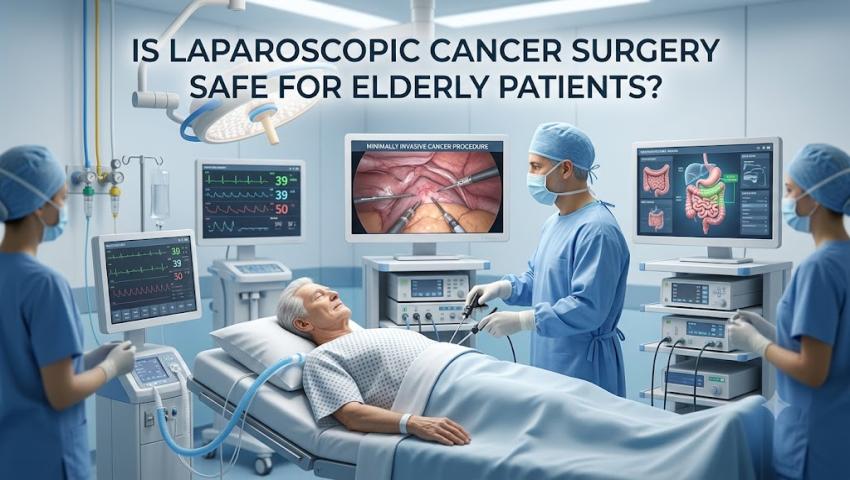
Yes, laparoscopic cancer surgery is generally very safe for elderly patients. Because chronological age is less important than overall physiological health, minimally invasive techniques protect senior citizens by causing less trauma, minimizing blood loss, and lowering post-operative risks compared to traditional open surgery.
When an elderly family member faces a cancer diagnosis, every treatment decision becomes deeply personal. Families worry intensely about whether older adults can handle major operations, physical recovery, and the strains of anesthesia. Traditional open surgery often involves long incisions, intense post-operative pain, and extended hospital stays, which can be difficult for senior citizens.
Fortunately, modern advancements in surgical oncology led by experts like Dr. Lalit Banswal have transformed care. Minimally invasive techniques have made it possible to treat older adults safely. Evaluating whether laparoscopic cancer surgery is safe for elderly patients involves understanding how modern surgical technology protects physiological reserves, reduces complications, and ensures rapid healing.
Understanding Laparoscopic vs. Open Cancer Surgery
Laparoscopic surgery is a minimally invasive technique where specialized instruments and a high-definition camera (laparoscope) are inserted through several small keyhole incisions.
- Traditional Open Surgery: Requires a single, large surgical incision to access the tumor, which cuts through major muscle groups and causes high tissue trauma.
- Laparoscopic Surgery: Relies on tiny ports, allowing the surgical oncologist to view internal organs on a magnified monitor with exceptional precision.
While open surgery exposes larger areas of the body to air and handling, keyhole surgery minimizes external disruption, making it a viable option for patients who require advanced cancer surgery options.
Why Age Alone is Not a Contraindication for Cancer Surgery?
In geriatric oncology, chronological age is rarely the primary deciding factor for surgery. Physiological age—how well an older adult’s heart, lungs, and kidneys function—matters far more than the number of years they have lived.
Many patients in their 70s and 80s possess robust physiological health and can tolerate operations exceptionally well when evaluated properly. Restricting life-saving cancer treatment based solely on age is an outdated approach. Modern pre-operative evaluations focus on functional status, nutritional health, and bodily resilience rather than birth dates.
Key Benefits of Minimally Invasive Surgery for Senior Citizens:
Senior patients experience distinct advantages when undergoing keyhole tumor removal instead of traditional open procedures:
- Reduced Surgical Trauma and Blood Loss: Smaller incisions mean significantly less bleeding during the operation, protecting fragile systems.
- Faster Recovery and Shorter Hospital Stays: Patients return to an active lifestyle much quicker, avoiding long periods of confinement.
- Lower Risk of Post-Operative Infections: Smaller wounds have a drastically lower surface area exposure, minimizing the risk of surgical site infections.
- Early Mobilization to Prevent Complications: Getting out of bed within hours of surgery helps prevent dangerous blood clots (deep vein thrombosis) and pneumonia.
Assessing Safety: Risks and Physiological Challenges in Older Adults
While laparoscopy is revolutionary, performing any operation on older adults demands careful risk assessment.
- Anesthesia and Cardiopulmonary Considerations: Older hearts and lungs must handle the stress of anesthesia and carbon dioxide insufflation used during laparoscopy. Advanced monitoring prevents cardiovascular strain.
- Managing Underlying Comorbidities: Conditions like hypertension, diabetes, or mild chronic kidney disease must be thoroughly optimized prior to any procedure.
- Post-Operative Cognitive Recovery and Delirium Prevention: Seniors are more susceptible to post-operative confusion. Minimally invasive methods reduce systemic inflammation, helping lower the incidence of delirium.
How Is the Risk Reduced?
Minimizing surgical risks for older adults requires a structured, multi-step optimization protocol before, during, and after the operation:
- Comprehensive Geriatric Assessment: Evaluating nutritional status, muscle mass (sarcopenia), and baseline organ function.
- Pre-habilitation Programs: Customized breathing exercises, gentle physical conditioning, and nutritional fortification to build strength prior to the date of surgery.
- Advanced Technological Precision: Using high-definition 3D visualization systems allows Dr. Lalit Banswal to navigate complex anatomical spaces cleanly, avoiding critical nerves and blood vessels.
- Enhanced Recovery After Surgery (ERAS) Protocols: Integrating pain management strategies that minimize heavy narcotics, encouraging early eating, and supporting fast mobilization.
How Dr. Lalit Banswal Evaluates Elderly Patients for Surgery?
Every elderly patient receives a customized risk-benefit analysis at Sai Vedant Multi Speciality Hospital, Undri, Pune. The evaluation process looks closely at:
- Cardiovascular Fitness: Detailed cardiac clearance and ECG/echocardiogram testing.
- Pulmonary Reserves: Lung function tests to ensure the body manages carbon dioxide clearance smoothly.
- Oncological Goals: Balancing life expectancy, cancer staging, and the expected quality of life enhancement post-surgery.
Long-Term Oncological Outcomes: Does Minimally Invasive Surgery Compromise Cancer Cure Rates?
A common fear among families is whether small incisions mean “less thorough” cancer removal. Extensive clinical trials and global oncological data confirm that laparoscopic cancer surgery achieves identical oncological clearance compared to open surgery.
When performed by an expert surgical oncologist, the procedure successfully removes the tumor along with adequate surrounding margins and local lymph nodes, ensuring that long-term survival rates are fully preserved while granting a less painful recovery process.
Conclusion and Scheduling an Oncology Consultation:
Deciding on cancer surgery for an aging parent or loved one requires expert guidance, transparent communication, and advanced clinical skill. Minimally invasive procedures have completely shifted the paradigm, ensuring that advanced age is no longer a barrier to receiving safe, effective cancer treatment.
For personalized advice and a thorough evaluation, families can schedule an oncology consultation and evaluation to discuss available surgical options. Connect with Dr. Lalit Banswal at Sai Vedant Multi Speciality Hospital, Undri, Pune to explore safe, compassionate, and advanced cancer care tailored to your loved one’s unique health needs.
FAQs About Minimally invasive cancer surgery for seniors:
Yes, provided the patient undergoes a thorough medical fitness evaluation. Dr. Lalit Banswal routinely performs minimally invasive oncological procedures on senior patients with excellent safety margins.
The primary risks relate to underlying heart or lung conditions and how the body handles anesthesia, which are carefully managed at Sai Vedant Multi Speciality Hospital, Undri, Pune, through advanced pre-operative testing.
Because it causes less tissue disruption and lower blood loss, elderly patients experience far less post-operative pain, enabling them to walk and breathe deeply much faster.
Yes, clinical data prove that laparoscopic tumor removal achieves the same cancer-free survival rates as open surgery when executed with proper oncological precision by Dr. Lalit Banswal.
Dr. Lalit Banswal conducts comprehensive evaluations checking cardiac, pulmonary, and nutritional fitness to design a safe, individualized surgical pathway.