
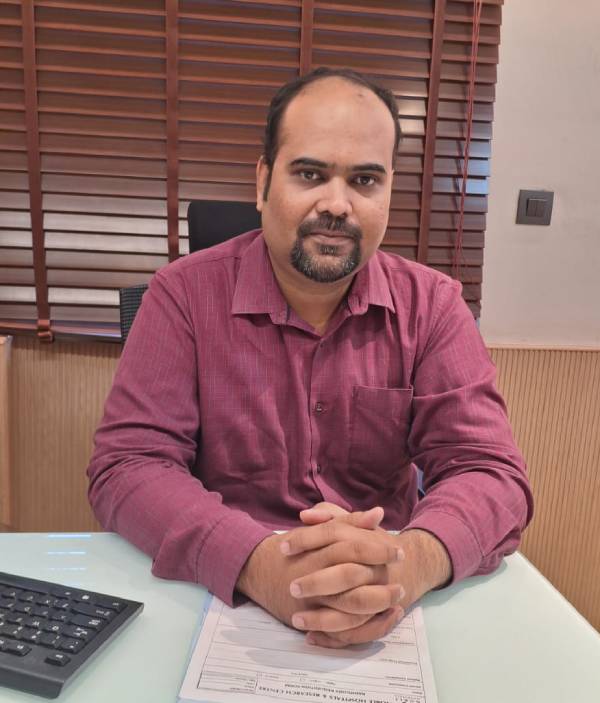
Prostate Cancer Surgeon in Pune — Dr. Lalit Banswal
If you or a loved one has been diagnosed with prostate cancer, finding the right specialist is the most important step you can take. Dr. Lalit Banswal, one of the best Cancer Surgeons in Pune and a highly experienced Best Surgical Oncologist in Pune, provides advanced, personalised Prostate Cancer Treatment in Pune at Sai Vedant Multi Speciality Hospital. With over 20+ years of surgical experience, more than 20,000 complex cancer surgeries performed, and a Ph.D. in Oncology, Dr. Lalit Banswal is a trusted name for patients across Pune, Undri, Hadapsar, Magarpatta, Kondhwa, and surrounding areas seeking expert prostate cancer care close to home.
What Is Prostate Cancer?
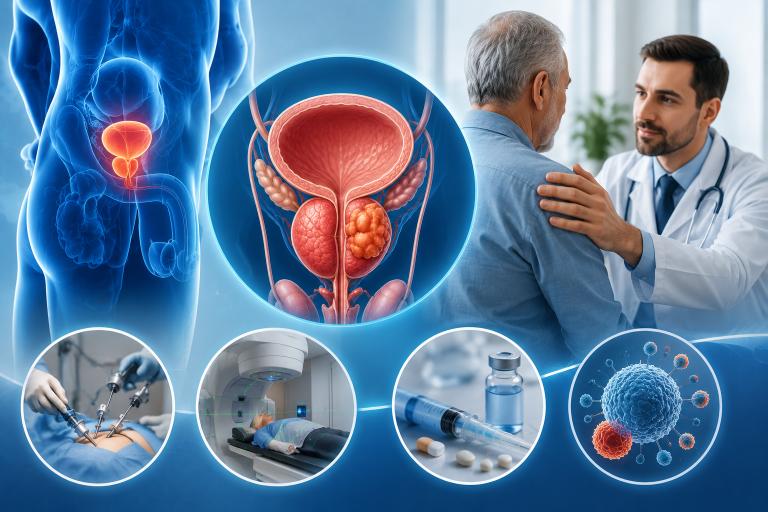
Prostate cancer means the uncontrolled growth of malignant cells in the prostate gland — a small, walnut-sized gland in men that produces seminal fluid. Medically known as prostatic adenocarcinoma, it is one of the most common forms of male prostate cancer worldwide.
The prostate gland plays a key role in male reproductive health. When cells in this gland begin to grow abnormally, they form a prostate cancer tumor that can remain confined to the gland or spread to nearby tissues and distant organs if left untreated.
The good news is that prostate cancer, when detected early, has one of the highest cure rates among all cancers.
How Common Is Prostate Cancer in India?
Prostate cancer in males is steadily rising in India, particularly in urban populations. Key facts:
- Prostate cancer is among the top 3 cancers in Indian men above the age of 50
- Urban cities like Pune, Mumbai, and Delhi report significantly higher incidence rates than rural areas
- Increasing awareness, better screening, and lifestyle changes are leading more men to get diagnosed at earlier, more treatable stages
- Many cases of prostate cancer in India are still diagnosed late due to a lack of awareness about the signs of prostate cancer
This makes awareness and early screening critically important — especially for men above 50 or those with a family history of the disease.
Stages of Prostate Cancer:
Understanding liver staging helps patients and families make informed treatment decisions. Prostate cancer is classified into four stages:
- Stage 1 — Cancer is confined to a small area of the prostate. No symptoms in most cases. Highly curable.
- Stage 2 — Tumour is larger but still within the prostate gland. Still localised and very treatable.
- Stage 3 — Cancer has spread beyond the outer layer of the prostate to nearby tissues or seminal vesicles.
- Stage 4 — Cancer has spread to lymph nodes, bones, or distant organs. Treatment focuses on controlling growth and managing symptoms.
Early-stage prostate cancer (Stage 1 and 2) has the best prostate cancer treatment success rate and offers the highest chances of a complete cure.
Early Warning Signs of Prostate Cancer:
Many men ignore prostate symptoms, thinking they are a normal part of ageing. Recognising the signs of a prostate problem early can be life-saving.
Common signs of prostate cancer include:
- Frequent urination, especially at night
- Difficulty starting or stopping urination
- Weak or interrupted urine flow
- Burning sensation or pain during urination
- Blood in urine or semen
- Pain or discomfort in the pelvic area
- Erectile dysfunction
- Pain in the lower back, hips, or thighs may indicate advanced spread
These prostate problems should never be dismissed as routine ageing. If you are experiencing any of these signs, consult a Prostate Cancer Doctor in Pune at the earliest.
What Causes Prostate Cancer? Reasons of Prostate Cancer You Should Know
The exact reasons of prostate cancer are not always clear, but several risk factors significantly increase the likelihood of developing the disease:
- Age — Risk increases sharply after the age of 50. Most cases are diagnosed in men above 65.
- Family History — Men with a father or brother who had prostate cancer are twice as likely to develop it
- Genetics — Mutations in the BRCA1 and BRCA2 genes increase prostate cancer risk
- Diet — High intake of red meat and high-fat dairy products is linked to a higher risk
- Obesity — Overweight men are more likely to develop aggressive forms of prostate cancer
- Sedentary Lifestyle — Lack of physical activity contributes to hormonal imbalances that may trigger cancer cell growth
- Ethnicity — Some ethnic groups have a genetically higher predisposition to prostate cancer
Understanding these risk factors helps in taking preventive measures and getting screened at the right time.
How Is Prostate Cancer Diagnosed?
If you notice signs of prostate cancer or are at high risk, your Prostate Cancer Doctor in Pune will recommend the following diagnostic tests:
- PSA Blood Test (Prostate-Specific Antigen): A simple blood test that measures PSA levels. Elevated PSA levels may indicate prostate cancer or other prostate problems. This is the primary screening tool for prostate cancer.
- Digital Rectal Examination (DRE) The doctor physically examines the prostate through the rectum to check for abnormalities in size, shape, or texture.
- Multiparametric MRI (mpMRI) An advanced imaging technique that provides detailed images of the prostate gland, helping identify suspicious areas before a biopsy.
- Prostate Biopsy A small tissue sample is taken from the prostate and examined under a microscope to confirm the presence of prostatic adenocarcinoma. This is the gold standard for diagnosis.
- Bone Scan and CT Scan Used to check whether the prostate cancer tumor has spread to bones or other organs — essential for accurate staging.
- Genetic Testing Recommended for younger patients or those with a strong family history to check for hereditary gene mutations.
Being diagnosed with prostate cancer can feel overwhelming, but early and accurate diagnosis gives you the widest range of treatment options and the best outcomes.
Prostate Cancer Treatment Options in Pune:
Prostate cancer treatment options depend on the stage of cancer, the patient’s age, overall health, and personal preferences. At Sai Vedant Multi-Speciality Hospital, Dr. Lalit Banswal offers the full spectrum of prostate cancer treatment options:
- Active Surveillance — For very low-risk, early-stage cancer. Regular monitoring without immediate treatment. Suitable for elderly patients or those with other serious health conditions.
- Prostate Treatment Without Operation — Includes radiation therapy, hormone therapy, and targeted therapy for patients who are not surgical candidates
- Radiation Therapy — External beam radiation or brachytherapy (internal radiation) to destroy cancer cells
- Hormonal Therapy (Androgen Deprivation Therapy) — Reduces testosterone levels that fuel prostate cancer growth. Used alone or in combination with surgery or radiation
- Chemotherapy — Used for advanced or hormone-resistant prostate cancer
- Targeted Therapy and Immunotherapy — Newer advances in prostate cancer treatment that target specific cancer cell mechanisms with fewer side effects
- Surgery — The most definitive curative option for localised prostate cancer
Prostate cancer treatment and side effects vary depending on the method chosen. Dr. Lalit Banswal discusses every option in detail with each patient, ensuring fully informed decision-making.
Prostate Cancer Surgery in Pune — Types Performed by Dr. Lalit Banswal:
Surgery is the most effective curative treatment for localised prostate cancer. As a leading Genitourinary Cancer Surgeon in Pune, Dr. Lalit Banswal performs the following surgical procedures:
- Radical Prostatectomy — Open Surgery The traditional approach involves complete surgical removal of the prostate gland through a single larger incision. Recommended for complex cases where maximum surgical access is required.
- Laparoscopic Prostatectomy — Minimally Invasive Surgery Performed through small keyhole incisions using a camera and long instruments. Offers faster recovery and less blood loss compared to open surgery.
- Robotic-Assisted Radical Prostatectomy — Most Advanced Option The gold standard in modern prostate cancer surgery. Uses robotic arms controlled by the surgeon for unmatched precision, minimal blood loss, smaller incisions, and faster recovery. Dr. Lalit Banswal is one of Pune’s leading robotic prostate cancer surgeons.
- Nerve-Sparing Prostatectomy A specialised technique that carefully preserves the nerves responsible for urinary and sexual function during prostate removal. Significantly improves quality of life after surgery.
- Transurethral Resection of the Prostate (TURP) Used primarily for symptom relief rather than cure. Removes part of the prostate blocking urine flow. Recommended in advanced cases where surgery for cure is not possible.
Robotic Prostate Cancer Surgery in Pune — Radical Prostatectomy:
Robotic-assisted radical prostatectomy is the most advanced form of Prostate Cancer Surgery in Pune available today. Dr. Lalit Banswal performs this procedure using state-of-the-art robotic surgical systems, offering patients significantly better outcomes than traditional open surgery.
Why robotic surgery is preferred:
- Highly magnified, 3D view of the surgical area for greater precision
- Robotic arms move with greater flexibility than human hands inside the body
- Significantly less blood loss during surgery
- Much smaller incisions — minimal scarring
- Shorter hospital stay — most patients go home within 1 to 2 days
- Faster return to normal daily activities
- Better preservation of urinary control and sexual function through nerve-sparing techniques
- Lower risk of post-surgical complications
Patients from Hadapsar, Magarpatta, Kondhwa, Undri, and nearby areas travel to consult Dr. Lalit Banswal specifically for robotic cancer surgery — making him one of the most sought-after Prostate Cancer Surgeons in Pune.
Open Surgery vs Laparoscopic vs Robotic Surgery for Prostate Cancer:
Is Prostate Cancer Curable? What Results Can You Expect?
Yes, prostate cancer is one of the most curable cancers when detected early. Here is what patients can realistically expect:
- Stage 1 and 2 — Near 100% 5-year survival rate with surgery or radiation. Most patients achieve a complete cure.
- Stage 3 — 5-year survival rate above 85% with combined treatment
- Stage 4 — Treatment focuses on long-term control. Many patients live well for years with the right treatment plan.
The prostate cancer cure rate is directly linked to the stage at diagnosis and the quality of treatment received. Advances in prostate cancer treatment — including robotic surgery, targeted therapy, and immunotherapy — have dramatically improved outcomes even in advanced stages.
Prostate cancer treatment cost in India is significantly more affordable than in Western countries, making Pune an increasingly popular destination for prostate cancer treatment in India for patients from across Maharashtra and beyond.
Prostate Cancer Survival Rate by Age:
Life After Prostate Cancer Surgery:
Recovery after prostate cancer surgery is a journey — but most patients return to a full, active life with the right care and support.
What to expect after surgery?
- Most patients are discharged within 1 to 2 days after robotic surgery
- A urinary catheter is placed temporarily and removed within 1 to 2 weeks
- Light walking can begin within days of surgery
- Full recovery typically takes 3 to 6 weeks depending on the type of surgery
- Regular PSA blood tests are done every 3 to 6 months to monitor for recurrence
Managing common post-surgery concerns:
- Urinary incontinence — Usually temporary. Pelvic floor exercises (Kegel exercises) help significantly. Most patients regain full control within weeks to months.
- Erectile dysfunction — Nerve-sparing surgery significantly reduces this risk. Various treatment options are available to support recovery.
- Fatigue — Normal in the first few weeks. Gradually improves with light activity and a balanced diet.
- Emotional wellbeing — Counselling and support groups help patients and families cope with the emotional aspects of cancer treatment
Dr. Lalit Banswal and his team provide comprehensive post-surgical care and follow-up to ensure every patient recovers fully and confidently.
Why Choose Dr. Lalit Banswal — Best Prostate Cancer Specialist in Pune?
Patients across Pune, Hadapsar, Magarpatta, Kondhwa, Undri, and surrounding areas choose Dr. Lalit Banswal for prostate cancer treatment near me searches — and for very good reasons:
- 20+ Years of Experience — One of the most experienced Prostate Cancer Specialists in Pune with over 20,000 complex surgeries performed
- Robotic Surgery Expert — Pioneer in robotic-assisted radical prostatectomy in Pune, offering the highest precision and fastest recovery
- Ph.D. in Oncology — Awarded an Honours Doctorate in Oncology in 2023, reflecting deep academic and clinical expertise
- Maharashtra Ratna Award 2023 — Recognised by the Government of Maharashtra for outstanding contributions to cancer care
- Trained at Tata Medical Centre, Kolkata — Fellowship in Surgical Oncology from one of India’s most prestigious cancer institutes
- Comprehensive Cancer Care — Surgery, chemotherapy, targeted therapy, hormonal therapy, and robotic procedures all under one roof at Sai Vedant Multi Speciality Hospital, Undri, Pune.
- Patient-First Approach — Every patient receives a fully personalised treatment plan explained in simple, clear language
- Conveniently Located — Easily accessible from Hadapsar, Magarpatta, Kondhwa, Undri, and all major areas of Pune
Book an Appointment with a Prostate Cancer Specialist in Pune:
If you or someone in your family is experiencing signs of prostate cancer or has recently been diagnosed, do not delay. Early consultation with the right specialist can make all the difference in your treatment outcome and quality of life.
Booking your appointment is simple:
Call or WhatsApp: +919158050180
Email: dr.lalit.banswal@gmail.com
Fill in the appointment
Visit us at Sai Vedant Multi Speciality Hospital, Undri, Pune
OPD is available at multiple locations across Pune — including Ruby Hall Clinic, Noble Hospital, and Sahyadri Hospital — Monday to Sunday.
Do not wait for symptoms to worsen. Consult Dr. Lalit Banswal — the best Prostate Cancer Surgeon in Pune — and take the first step towards the right treatment today.
FAQs About Prostate Cancer Treatment in Pune:
The best treatment depends on the stage of cancer and the patient’s overall health. For localised prostate cancer, robotic-assisted radical prostatectomy offers the best outcomes — complete cancer removal with the fastest recovery and best preservation of urinary and sexual function. Dr. Lalit Banswal, a leading Prostate Cancer Surgeon in Pune, evaluates each patient individually and recommends the most suitable treatment plan.
Yes, in most cases robotic surgery is superior to open surgery. It offers greater precision, less blood loss, smaller incisions, shorter hospital stay, faster recovery, and better nerve preservation — resulting in improved quality of life after surgery. Dr. Lalit Banswal is one of Pune’s most experienced robotic prostate cancer surgeons with an excellent surgical track record.
Prostate cancer treatment cost in India varies depending on the type of surgery, hospital, stage of cancer, and length of hospital stay. In Pune, the cost of robotic prostatectomy is significantly more affordable than in Western countries while maintaining international quality standards. For an accurate cost estimate based on your specific condition, book a consultation with Dr. Lalit Banswal at Sai Vedant Multi Speciality Hospital.
Prostate cancer is generally one of the slowest-growing cancers. In most cases, early-stage prostate cancer can take several years — sometimes 10 to 15 years — to spread beyond the prostate gland. However, some aggressive forms of prostatic adenocarcinoma can grow and spread much faster. This is why regular PSA screening is essential for men above 50, even when no symptoms are present. Early detection by a Prostate Cancer Specialist in Pune gives you the best chance of stopping the cancer before it spreads.
Yes — prostate cancer can be completely cured, especially when detected at Stage 1 or Stage 2. The prostate cancer cure rate for early-stage disease is nearly 100% with surgery or radiation therapy. Even at Stage 3, many patients achieve long-term remission with the right treatment. Dr. Lalit Banswal, a leading Prostate Cancer Surgeon in Pune, has successfully treated hundreds of patients who are today living cancer-free after surgery at Sai Vedant Multi Speciality Hospital.
For localised prostate cancer, robotic-assisted radical prostatectomy is currently the most effective treatment — offering complete cancer removal, minimal blood loss, faster recovery, and the best preservation of urinary and sexual function. For patients who are not surgical candidates, radiation therapy combined with hormonal therapy is a highly effective alternative. The most effective treatment for each patient depends on the cancer stage, age, and overall health. Consult Dr. Lalit Banswal, the best Cancer Surgeon in Pune, for a personalised treatment plan.
Prostate cancer can be dangerous — but it does not have to be. When detected early, it is one of the most treatable and curable cancers in men. The danger increases significantly when cancer is diagnosed late, at Stage 3 or Stage 4, when it has already spread to nearby tissues or distant organs. Ignoring signs of prostate cancer or delaying consultation with a Prostate Cancer Doctor in Pune is what makes this disease life-threatening. Early action saves lives.
Prostate cancer occurs when cells in the prostate gland begin to grow and divide in an uncontrolled, abnormal manner — forming a prostate cancer tumor. Over time, these abnormal cells can invade surrounding tissue and spread to lymph nodes or bones. The exact trigger is not always known, but factors such as increasing age, hormonal changes, genetic mutations, unhealthy diet, and obesity all contribute to the development of male prostate cancer.
The most common reasons of prostate cancer include advancing age (especially above 50), a family history of prostate or breast cancer, inherited gene mutations such as BRCA1 and BRCA2, a diet high in red meat and saturated fats, obesity, and a sedentary lifestyle. Hormonal factors — particularly high levels of testosterone — also play a significant role in fuelling prostate cancer growth. Understanding these causes helps men at risk take timely preventive action and get screened before symptoms appear.




