Best Varicose Veins Treatment in Pune
Varicose veins are enlarged, twisted veins that usually appear on the legs or feet. They occur when the valves inside the veins stop working properly, causing blood to pool and veins to swell. Common symptoms include heaviness, throbbing pain, burning sensation, leg cramps, and, in advanced cases, skin discoloration or ulcers. If you are searching for varicose veins treatment in Pune, Dr. Lalit Banswal — a highly experienced varicose veins specialist in Pune — provides advanced and effective care using modern, minimally invasive techniques. Dr. Lalit Banswal offers the latest varicose veins laser treatment in Pune, which is a safe, painless, and quick procedure. It helps seal the affected veins using precise laser or radiofrequency energy, allowing blood flow to reroute through healthier veins. This results in faster recovery and long-term relief from pain and swelling.
With over 20+ years of surgical experience, Dr. Lalit Banswal has successfully treated numerous patients with complex vein conditions. His expertise and patient-centric approach ensure every individual receives a customized treatment plan for the best outcomes.
Dr. Lalit Banswal consults at Nobel Hospital, Hadapsar, and Harsh Hospital, Kondhwa, offering convenient access to expert vein care across Pune.
What Are Varicose Veins?
Varicose veins are swollen, twisted, and enlarged veins that occur when one-way valves weaken, causing blood to pool in the legs. Often searched as vasco veins, these appear as bulging, dark purple or veins green in color just beneath the skin’s surface. While they are a common cosmetic concern, they can also lead to aching pain and heaviness if left untreated.
Common Symptoms of Varicose Veins:
Recognizing the early signs of varicose veins is essential for preventing long-term complications. While some cases are purely cosmetic, many patients experience physical discomfort that worsens throughout the day.
- Visible Changes: You may notice swollen, twisted, or rope-like veins that appear dark purple or blue, typically along the legs and calves.
- Aching and Fatigue: A persistent heavy, tired, or “achy” feeling in the legs is common, especially after standing or sitting for long periods.
- Swelling: Fluid buildup often leads to swollen feet or ankles, which typically becomes more noticeable by the evening.
- Skin Irritation: Many patients report intense itching, burning, or a throbbing sensation directly over or around the affected veins.
- Muscle Cramping: Painful muscle cramps, particularly at night, can disrupt sleep and indicate poor venous circulation.
- Skin Discoloration: If left untreated, the skin around the veins may become dry, thin, or develop a brownish darkening (pigmentation).
Causes & Risk Factors for Varicose Veins:
Understanding why varicose veins develop is the first step toward effective treatment. The condition is primarily a circulatory issue where the veins in the lower body struggle to pump blood back to the heart against gravity.
Primary Causes of Varicose Veins
The root of the problem usually lies in the mechanical failure of the venous system:
- Damaged Vein Valves: Healthy veins have one-way valves that act as “gates” to prevent blood from flowing backward. When these valves weaken, blood leaks back and pools in the vein, causing it to stretch and twist.
- Weakened Vein Walls: If the walls of the veins lose their natural elasticity, they expand. This stretching pulls the valve flaps apart, making it impossible for them to close properly.
- Increased Venous Pressure: Chronic high pressure within the leg veins—often due to lifestyle or physical strain—forces the vessels to enlarge over time.
Key Risk Factors
While anyone can develop this condition, several factors significantly increase your likelihood of needing medical intervention:
- Age & Gender: Risk increases as we age because vein walls naturally lose tone. Women are more susceptible due to hormonal shifts during pregnancy, premenstruation, or menopause, which tend to relax vein walls.
- Pregnancy: The combination of increased blood volume in the body and the pressure of the growing uterus on pelvic veins often triggers vein swelling.
- Genetics: Family history is a major predictor. If both parents have varicose veins, there is nearly a 90% chance that their children will also develop them.
- Lifestyle & Weight: Obesity puts extra mechanical pressure on your vessels. Similarly, prolonged sitting or standing prevents leg muscles from acting as a “pump” to move blood upward, leading to pooling.
- Other Factors: Smoking, past leg injuries, and the use of hormone replacement therapy or birth control pills can further weaken venous health.
Diagnosis of Varicose Veins:
At Dr. Lalit Banswal’s Varicose Veins Clinic in Pune, diagnosis begins with a detailed clinical examination to understand the root cause of your vein problem. As an experienced doctor for varicose veins in Pune, Dr. Lalit Banswal uses a combination of visual assessment and advanced diagnostic tests to plan the best treatment.
1. Physical Examination:
The diagnosis starts with a close inspection of your legs to check for visible twisted or bulging veins. Dr. Lalit Banswal also evaluates symptoms such as pain, swelling, leg heaviness, cramping, itching, or skin discoloration that often accompany varicose veins.
2. Palpation and Symptom Evaluation:
By gently feeling the affected area, Dr. Lalit Banswal checks for tenderness, warmth, or swelling, helping to rule out conditions like phlebitis or inflammation.
3. Venous Doppler Ultrasound:
This non-invasive test is performed to evaluate the blood flow in your veins and identify any valve leakage or blood clots (DVT). It is one of the most reliable ways to assess vein health.
4. Duplex Ultrasound & Vein Mapping:
A duplex ultrasound provides a detailed image of your vein structure and helps in planning laser treatment for varicose veins in Pune. Vein mapping assists in identifying the exact veins that require treatment for better precision during surgery.
5. Photoplethysmography (PPG):
This test measures how efficiently blood returns to the heart, helping to determine the severity of venous reflux.
With a complete and precise diagnosis, Dr. Lalit Banswal ensures that every patient receives a personalized treatment plan, whether it’s lifestyle modification, compression therapy, or advanced laser treatment for varicose veins in Pune.
Best Varicose Veins Treatment in Pune by Dr. Lalit Banswal:
Dr. Lalit Banswal, a leading vascular and laser surgeon, offers advanced and minimally invasive options for varicose veins treatment in Pune. At Sai Vedant Multi Speciality Hospital, known as the best hospital for varicose veins treatment in Pune, patients receive safe, effective, and cosmetically pleasing solutions for lasting relief.
With years of surgical expertise, Dr. Lalit Banswal provides personalized care using modern laser and radiofrequency techniques. He is recognized as the varicose veins best doctor in Pune, known for his patient-focused approach and successful outcomes.
Endovenous Laser Treatment (EVLT)
What is EVLT?
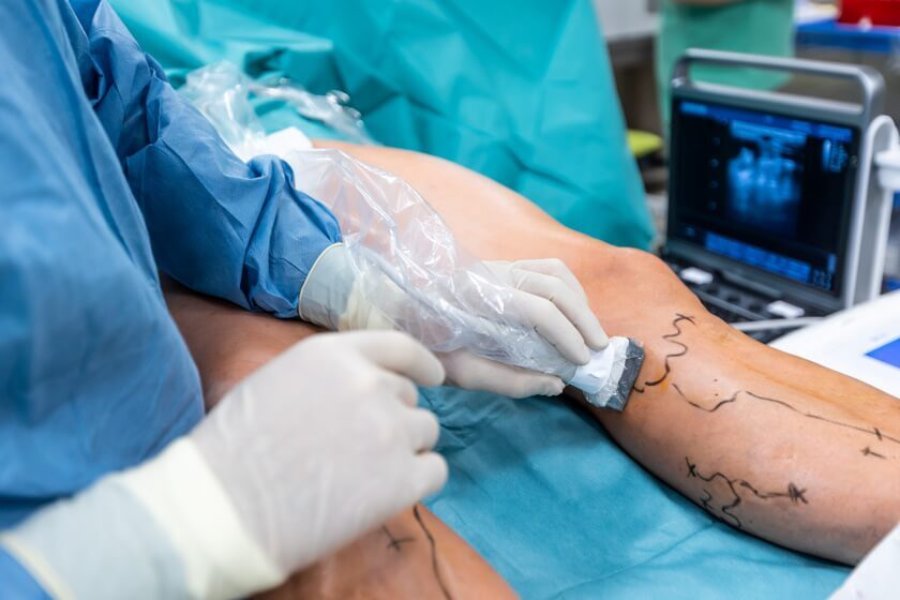
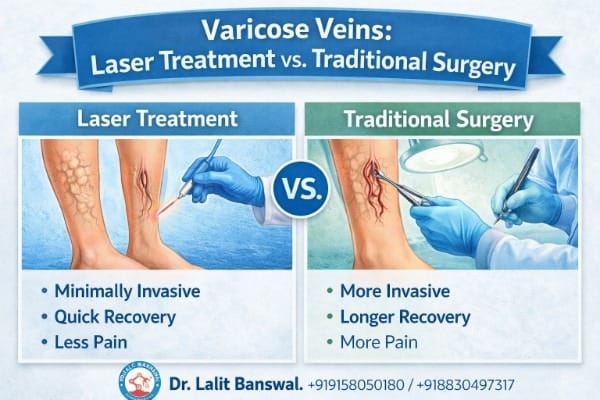
Endovenous Laser Treatment is a modern, non-surgical procedure done under local anesthesia. A thin laser fiber is inserted into the affected vein using ultrasound guidance. The laser heat seals the damaged vein, and blood flow naturally shifts to healthy veins.
Benefits:
-
No stitches or general anesthesia
-
Same-day discharge (walk-in, walk-out)
-
Quick relief with minimal discomfort
-
High success rate (around 96–97%)
-
Cosmetic improvement with no visible veins
Best for: Large varicose veins in the great or small saphenous veins.
Radiofrequency Ablation (RFA)
What is RFA?
Radiofrequency Ablation is a minimally invasive varicose veins surgery in Pune, performed under local anesthesia. A fine catheter delivers radiofrequency energy to heat and close the damaged vein segment by segment.
Benefits:
-
Painless and quick
-
Faster recovery – most patients return to work in 2–3 days
-
Very low complication rate
-
Excellent long-term success
Best for: Main superficial veins, especially when laser access is limited.
Foam Sclerotherapy
What is it?
Foam Sclerotherapy involves injecting a medical foam into smaller varicose or spider veins. The foam irritates the vein walls, causing them to collapse and fade away naturally.
Benefits:
-
Ideal for small and residual veins after EVLT or RFA
-
Cosmetic improvement without surgery
-
No downtime – resume activities immediately
Best for: Reticular and spider veins or post-laser residual veins.
Surgical Ligation and Vein Stripping
This traditional surgery is now rarely required. It is reserved for severe or recurrent cases that do not respond to minimally invasive methods. The damaged vein is tied and removed through small incisions.
Benefits:
-
Permanent removal of large damaged veins
-
Effective for complex or advanced varicose veins
Though it involves longer recovery and mild scarring, Dr. Lalit Banswal ensures patients are guided to the most suitable and least invasive option.
Complications of Untreated Varicose Veins:
Ignoring varicose veins can lead to several serious health issues over time. Dr. Lalit Banswal, a leading varicose veins specialist in Pune, advises early diagnosis and treatment to prevent permanent leg damage.
1. Skin and Tissue Damage
-
Venous Ulcers: Long-standing pressure in veins can cause open, painful sores near the ankles. These ulcers heal slowly and are prone to infection.
-
Hyperpigmentation: The skin around affected veins may turn reddish-brown or dark due to the leakage of blood cells.
-
Lipodermatosclerosis: The skin becomes thick, hard, and discolored, giving the lower leg a tight or bottle-shaped appearance.
-
Venous Eczema: The skin may become red, dry, and itchy. Constant scratching can break the skin, increasing the risk of ulcers.
-
Cellulitis: Poor blood flow can weaken skin defences, leading to bacterial infection, redness, and swelling.
2. Blood Clots
-
Superficial Thrombophlebitis: A blood clot can form in a surface vein, causing redness, warmth, and pain. While not life-threatening, it requires timely medical care.
-
Deep Vein Thrombosis (DVT): Varicose veins increase the risk of dangerous clots forming in deep veins. DVT can cause swelling, pain, and heaviness in the leg.
-
Pulmonary Embolism: If a clot from the leg travels to the lungs, it can block blood flow and cause severe chest pain, shortness of breath, and rapid heartbeat. This is a medical emergency.
3. Other Complications
-
Bleeding: Since varicose veins are close to the skin, even a small injury can cause heavy bleeding. In some cases, bleeding can occur spontaneously.
-
Chronic Venous Insufficiency (CVI): When veins cannot pump blood effectively, it leads to persistent swelling, cramps, and skin changes. If left untreated, this condition worsens over time.
Laser Treatment for Varicose Veins Cost in Pune:
Choosing laser therapy is a popular, minimally invasive option for patients seeking a quick recovery. In Pune, the cost of vein treatment varicose patients receive depends on the extent of the condition and the technology used.
Estimated Cost Breakdown
Single Leg (EVLT): Typically ranges from ₹80,000 to ₹90,000.
Both Legs (EVLT): Usually optimized between ₹1,25,000 and ₹1,30,000.
Alternative Procedures: Sclerotherapy sessions cost around ₹20,000 – ₹25,000, while Radiofrequency Ablation (RFA) can range from ₹40,000 to ₹1,00,000.
Factors Affecting the Price
The final investment for your vein treatment varicose care is influenced by the severity of the vein damage, the surgeon’s expertise, and the hospital’s reputation. Most insurance providers cover these procedures when they are medically necessary to treat pain or swelling.
Why Choose Dr. Lalit Banswal - Best Varicose Veins Surgeon in Pune?
Post-Treatment Care & Recovery at Sai Vedant Multi Speciality Hospital:
At Sai Vedant Multi Speciality Hospital, our goal is to ensure your recovery is as smooth and comfortable as possible. Following the guidance of a specialist for varicose vein care is crucial to achieving the best long-term results and preventing complications.
Key Post-Treatment Care Instructions
To support your healing after a laser or surgical procedure, follow these essential steps:
- Stay Mobile: We encourage you to start walking immediately after your treatment. Daily walking is vital as it promotes healthy circulation and significantly lowers the risk of blood clots.
- Wear Compression Stockings: You will be prescribed medical-grade compression socks varicose veins patients need to minimize swelling and bruising. These are typically worn for 1–3 weeks, sometimes even 24/7 during the first few days.
- Activity Restrictions: While walking is encouraged, you should avoid heavy lifting, high-impact workouts, or sitting/standing in one position for long periods for at least two weeks.
- Leg Elevation: Whenever you are resting, keep your legs elevated above heart level to reduce pressure and inflammation.
- Wound Care: Keep the treated area clean and dry. You can usually shower after 24–48 hours, but please avoid swimming, hot tubs, or soaking in baths for at least two weeks.
Recovery Timeline & Expectations
- First 3 Days: It is normal to feel some tightness or see mild bruising. While the initial discomfort fades quickly, deeper bruising can take a few months to fully clear.
- Returning to Routine: Most patients can return to work within 1–2 days, depending on their job requirements. However, you should avoid driving for at least 48 hours or until you are off any pain medication and can react quickly behind the wheel.
- Travel Precautions: To maintain vascular health, our specialist for varicose vein treatments recommends avoiding long-haul flights for at least four weeks post-procedure.
Book an Appointment with Dr. Lalit Banswal – Varicose Veins Specialist in Pune:
If you’re looking for a Varicose Veins Specialist in Pune, Dr. Lalit Banswal offers advanced and minimally invasive options like laser and radiofrequency procedures. As a trusted veins doctor near me for patients across the city, Dr. Lalit Banswal consults at Nobel Hospital, Hadapsar, and Harsh Hospital, Kondhwa. Book an appointment with Dr. Lalit Banswal today or call 9158050180 for expert vascular care.
FAQs - Varicose Veins Treatment in pune:
No. The procedure is done under local anesthesia and is virtually painless.
With proper technique and post-care, recurrence is rare. Lifestyle changes help prevent new veins from forming.
You can start walking immediately after the procedure.
Yes, if symptomatic or causing complications. Cosmetic treatments may not be covered.
Yes. Most cases are successfully treated with non-surgical laser or RFA therapy.
The cost of varicose veins laser treatment in Pune generally ranges between ₹45,000 to ₹1,20,000 per leg. The exact price depends on several factors like the severity of the veins, number of affected veins, type of laser used, and hospital facilities.




