When a patient is diagnosed with stomach cancer, surgery is often the most important part of the treatment plan. But one of the most common questions patients and families ask is — which type of surgery is better? Laparoscopic vs open gastrectomy is a comparison that matters deeply, because the choice of surgical approach directly affects recovery time, quality of life, and long-term outcomes. Stomach cancer surgery in India has advanced significantly over the last decade, and today, patients have access to both traditional open surgery and advanced minimally invasive options. Understanding the difference can help you make a more informed decision alongside your surgeon.
What Is a Gastrectomy?
A gastrectomy is a surgical procedure to remove part or all of the stomach to treat stomach cancer. It is the primary form of gastric cancer surgical treatment for eligible patients and is recommended based on the stage and location of the tumour.
There are two main types based on the extent of removal:
- Partial gastrectomy — Only the cancerous portion of the stomach is removed
- Total gastrectomy — The entire stomach is removed when the cancer has spread widely within it
The choice between total vs partial gastrectomy depends on stomach cancer stages and the treatment planning done by your surgical oncologist. Both types can be performed using either Laparoscopic Cancer Surgery or open surgical techniques.
What Is Laparoscopic Gastrectomy?
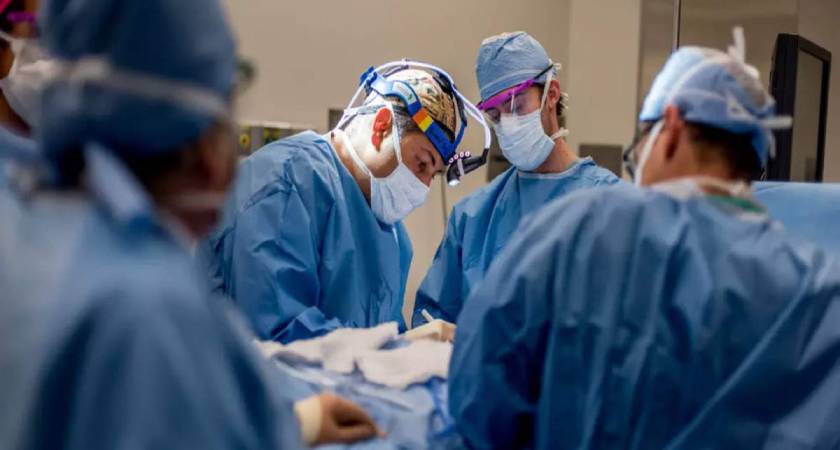
Laparoscopic gastrectomy for stomach cancer is a minimally invasive surgical approach where the surgeon removes the cancerous part of the stomach through several small keyhole incisions instead of one large cut. It is now widely accepted as a safe and effective stomach cancer treatment option for early to locally advanced cases.
How Is Laparoscopic Gastrectomy Performed?
Here is how laparoscopic surgery for gastric cancer is carried out step by step:
- The patient is placed under general anaesthesia
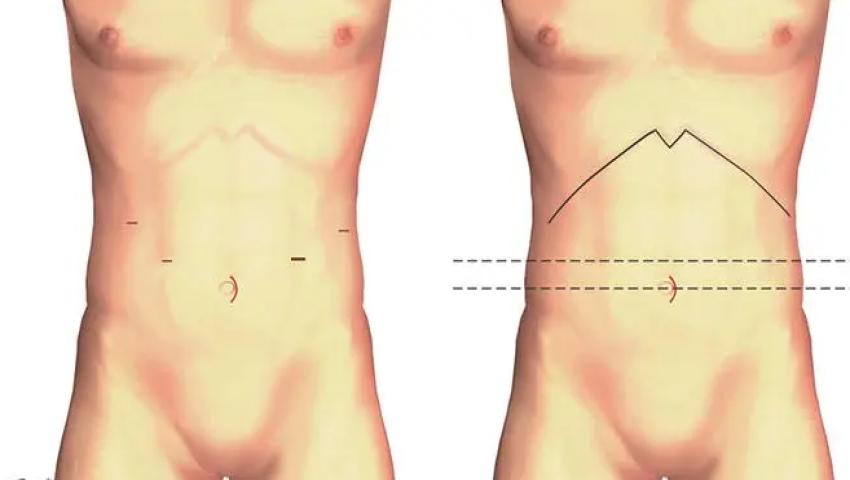
- The surgeon makes 4 to 5 small incisions (less than 1 cm each) in the abdomen
- A tiny camera (laparoscope) and surgical instruments are inserted through these cuts
- The camera projects a magnified view of the stomach and surrounding tissue on a monitor
- The cancerous portion of the stomach is carefully removed
- Lymph nodes are also removed as required for staging and to prevent spread
- The digestive tract is reconnected (anastomosis) to restore normal function
This gastrectomy procedure offers surgeons an excellent view of the surgical field with minimal disruption to surrounding tissue.
Benefits of Laparoscopic Gastrectomy for Stomach Cancer:
The laparoscopic gastrectomy benefits for patients are significant and well-supported by clinical evidence:
- Smaller incisions — minimal scarring
- Less blood loss during surgery
- Significantly reduced post-operative pain
- Shorter hospital stay — most patients are discharged within 5 to 7 days
- Faster laparoscopic surgery recovery — patients return to daily activities sooner
- Lower risk of wound infection
- Better cosmetic outcome
- Equally effective cancer removal compared to open surgery in eligible patients
Minimally invasive stomach cancer surgery has transformed the surgical experience for thousands of patients across India.
What Is Open Gastrectomy?
Open gastrectomy is the traditional surgical approach where the surgeon makes a single large incision — typically 15 to 25 cm — across the abdomen to directly access and remove the stomach or the affected portion of it. For decades, open surgery for stomach cancer in India was the only available option, and it remains a trusted and proven technique today.
How Is Open Gastrectomy Performed?
The gastrectomy procedure for open surgery involves:
- General anaesthesia is administered
- A large incision is made through the abdominal wall
- The surgeon directly views and accesses the stomach
- The cancerous portion — partial or total — is removed along with surrounding lymph nodes
- The digestive tract is reconstructed
- The incision is closed with sutures or staples
Open surgery allows the surgeon maximum access and the ability to feel tissue directly, which is valuable in complex or advanced cases.
When Is Open Gastrectomy the Better Choice?
Open surgery remains the preferred approach in certain situations:
- Advanced stomach cancer surgery where the tumour is large or has spread to adjacent organs
- Cases where laparoscopic surgery cannot be completed safely
- Patients who have had multiple previous abdominal surgeries, causing adhesions
- Emergency surgical situations
- When robotic or laparoscopic equipment is not available
In these cases, the direct access provided by open surgery gives the surgeon the best chance of complete cancer removal.
Laparoscopic vs Open Gastrectomy — Key Differences:
Here is a clear comparison of open gastrectomy vs laparoscopic gastrectomy to help patients understand the key differences:
When comparing laparoscopic vs open gastrectomy, neither approach is universally superior — the right choice depends entirely on the individual patient’s condition, tumour stage, and the surgeon’s expertise.
Which Surgery Has Better Outcomes for Stomach Cancer?
This is the most important question patients ask, and the answer is reassuring for most.
Survival Rate — Laparoscopic vs Open Surgery:
Multiple clinical studies and trials have confirmed that laparoscopic gastrectomy for stomach cancer delivers equivalent long-term oncological outcomes compared to open surgery in early to locally advanced cases. The stomach cancer surgery survival rate is comparable between the two approaches when performed by an experienced surgical team.
- 5-year survival rates for Stage 1 stomach cancer after gastrectomy: above 90%
- Stage 2: approximately 60 to 70%
- Stage 3: approximately 30 to 50%
The stomach cancer surgery success rate depends more on the stage at diagnosis and the completeness of cancer removal than on which surgical technique is used. Laparoscopic vs open gastrectomy outcomes are equivalent in the hands of a skilled surgeon.
Recovery Time and Quality of Life:
This is where laparoscopic surgery shows a clear advantage:
- Gastrectomy recovery time in India for laparoscopic surgery: 3 to 4 weeks on average
- Stomach cancer operation recovery time for open surgery: 6 to 8 weeks
- Patients after laparoscopic surgery report less pain, earlier return to eating, and better overall quality of life in the weeks following the procedure.
- Laparoscopic surgery recovery also means patients can begin adjuvant chemotherapy or other treatments sooner if required.
Who Is a Good Candidate for Laparoscopic Gastrectomy?
Not every stomach cancer patient is suitable for minimally invasive gastrectomy. The following criteria are considered:
- Stage of cancer — Early stage (Stage 1 and 2) and selected Stage 3 patients are ideal candidates for minimally invasive stomach cancer surgery.
- Tumour location — Cancers located in the lower or middle portion of the stomach are more suitable for laparoscopic removal
- Patient’s overall health — Patients must be fit enough for general anaesthesia and laparoscopic surgery.
- No extensive prior abdominal surgery — Previous operations can create scar tissue that complicates laparoscopic access.
- Surgeon’s expertise — Laparoscopic gastrectomy requires advanced surgical training and experience.
For patients with more complex anatomy or advanced disease, robotic gastrectomy — the next evolution beyond laparoscopic surgery — may offer even greater precision and control. Total vs partial gastrectomy decisions and stomach cancer stages and treatment planning are made on a case-by-case basis after thorough evaluation.
Risks and Complications — What Patients Should Know?
Both surgical approaches carry risks that patients should discuss openly with their surgeon before making a decision.
Common gastric cancer surgery complications for both approaches include:
- Anastomotic leak — where the reconnected digestive tract does not heal properly
- Infection at the surgical site
- Bleeding during or after surgery
- Dumping syndrome — rapid movement of food from the stomach into the small intestine
- Nutritional deficiencies following the removal of the stomach
Laparoscopic-specific risks:
- Conversion to open surgery if complications arise during the procedure
- Longer operation time compared to open surgery
Open surgery-specific risks:
- Higher risk of wound infection due to the larger incision
- Longer gastrectomy recovery time in India with more post-operative discomfort
Discussing these risks with your surgeon helps set realistic expectations and ensures the best possible preparation for surgery.
Stomach Cancer Surgery in Pune — Consult Dr. Lalit Banswal:
If you or a loved one has been diagnosed with stomach cancer and wants to understand whether laparoscopic stomach cancer surgery in Pune is the right option, the most important step is consulting an expert surgical oncologist.
Dr. Lalit Banswal is one of the best cancer surgeons in Pune, with 20+ years of experience, 20,000+ complex cancer surgeries performed, and a Ph.D. in Oncology (Hons). Trained at the Tata Medical Centre, Kolkata, and a recipient of the Maharashtra Ratna Award 2023, Dr. Lalit Banswal specialises in laparoscopic surgery in Pune, robotic surgery in Pune, and advanced GI cancer surgical treatment.
As the best cancer specialist in Pune practicing at Sai Vedant Multi Speciality Hospital, Undri, Pune, Dr. Lalit Banswal offers the full spectrum of stomach cancer treatment in Pune — from initial diagnosis and staging to surgical planning, cancer surgery in Pune, and post-operative care.
Whether you need a first opinion, a second opinion on your surgical plan, or guidance on gastrectomy surgery cost in India, Dr. Lalit Banswal and his team are here to help.
Call / WhatsApp: +919158050180
Book your appointment with Dr. Lalit Banswal today and get the right guidance on stomach cancer treatment in Pune.
Frequently Asked Questions:
Yes, laparoscopic gastrectomy for stomach cancer is safe and well-established for early to locally advanced cases. Multiple clinical trials have confirmed that it delivers equivalent cancer removal outcomes to open surgery with the added benefits of smaller incisions, less blood loss, and faster recovery. The key is having the procedure performed by an experienced surgical oncologist in Pune who specialises in minimally invasive cancer surgery.
The stomach cancer surgery survival rate depends primarily on the stage at which the cancer is detected and treated. For Stage 1, the 5-year survival rate exceeds 90%. For Stage 2, it is approximately 60 to 70%, and for Stage 3, around 30 to 50%. Early detection and complete surgical removal by the best cancer surgeon in Pune significantly improves outcomes.
Gastrectomy recovery time in India varies by surgical approach. After laparoscopic surgery, most patients recover in 3 to 4 weeks and are discharged within 5 to 7 days. After open surgery, the stomach cancer operation recovery time is typically 6 to 8 weeks. Dr. Lalit Banswal and his team provide complete post-operative support to ensure a smooth and comfortable recovery.
The main difference between open gastrectomy vs laparoscopic gastrectomy lies in the surgical approach. Laparoscopic surgery uses small keyhole incisions and a camera, while open surgery requires one large abdominal incision. Laparoscopic surgery offers faster recovery, less pain, and minimal scarring. Open surgery is preferred for advanced cases or complex tumours. Both are effective forms of cancer surgery in Pune when performed by a skilled surgeon.
There is no single answer that fits every patient. When comparing laparoscopic vs open gastrectomy, the better choice depends on the stage of cancer, tumour size and location, and the patient’s overall health. For early to locally advanced stomach cancer, laparoscopic gastrectomy delivers equivalent survival outcomes with significantly better recovery. For advanced or complex cases, open surgery remains the gold standard. Consulting a stomach cancer specialist in Pune, like Dr. Lalit Banswal, is the best way to determine which approach is right for your specific condition.