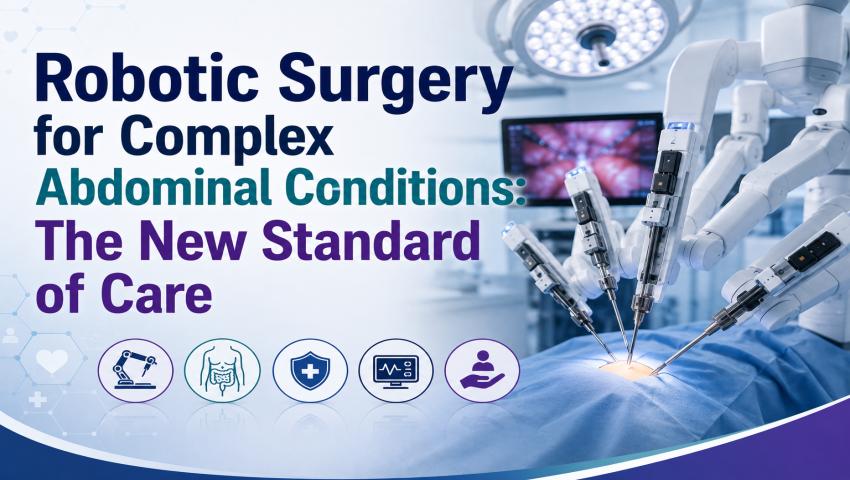
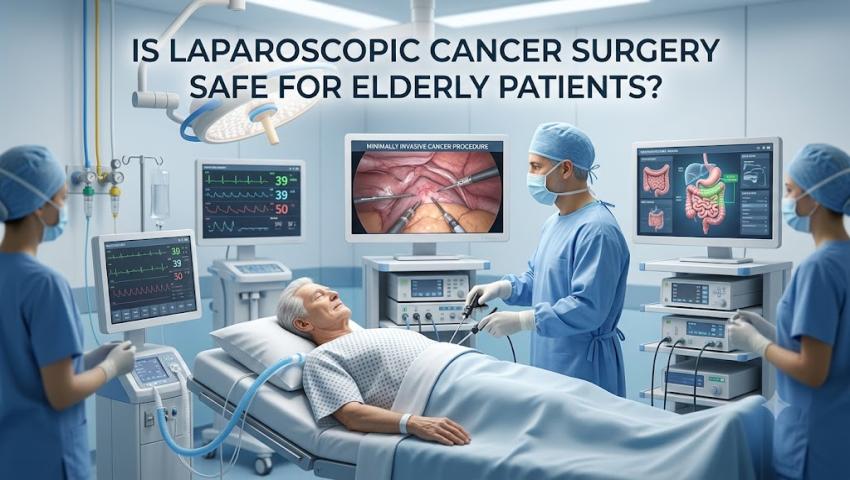
Robotic Surgery for Complex Abdominal Conditions: The New Standard of Care

The Evolution of Abdominal Surgery: From Open to Robotic

For decades, traditional open surgery was the primary method used to treat serious internal issues. While effective, it required long incisions that left large scars and caused significant physical trauma to the body. The introduction of laparoscopy introduced keyhole abdominal surgery, allowing doctors to work through tiny incisions using long instruments and specialized cameras. Today, modern technology has evolved even further. Patients seeking advanced treatments now turn to robotic gastrointestinal surgery Pune as the ultimate precision tool for complex abdominal cases. Guided by the expert hands of Dr. Lalit Banswal, this new era of surgery transforms major procedures into accurate, minimally invasive treatments.

Defining "Complex" Abdominal Conditions:

A complex abdominal condition involves deep-seated tumors, severe organ damage, or tricky structural issues within the digestive tract and abdominal wall. These are not basic or standard operations. They involve critical regions like the stomach, pancreas, liver, and colon, where large blood vessels and essential nerves live close together. Dealing with advanced gastrointestinal malignancy, deep pelvic tumors, or recurring hernias requires advanced laparoscopic vs robotic surgery systems that allow an operating surgeon to work safely inside tightly packed areas without disturbing surrounding tissues.

What Makes Robotic Surgery Different?

How the Robot Assists the Surgeon? (It Doesn't Operate Independently)

A common misconception is that the machine performs the operation on its own. In reality, the equipment cannot make choices or move without direct human command. During a procedure, Dr. Lalit Banswal sits comfortably at a high-tech master console just a few feet away from the patient. Every tiny turn of the doctor’s fingers is translated in real-time into exact, scaled movements of the robotic arms inside the patient. The technology functions purely as an extension of the doctor’s unmatched physical skill, eliminating natural hand tremors and boosting technical capabilities.

The 3D High-Definition Advantage:

Standard laparoscopic cameras display a flat, two-dimensional image on a standard wall monitor, which makes depth perception difficult during deep tissue work. The robotic setup solves this issue by using an advanced camera system that delivers a magnified, crystal-clear 3D high-definition visualization directly to the console display. This lets Dr. Lalit Banswal see internal structures with incredible depth and clarity, making it easier to distinguish healthy tissues from diseased sections.

Precision and EndoWrist Instrument Flexibility:

Human hands are naturally limited by the shape of our wrists and fingers when working through a small surgical opening. The specialized instruments used in robotic platforms feature patented EndoWrist technology. These tiny tools possess a range of motion greater than the human wrist, allowing them to bend, twist, and turn in microscopic angles inside the body. This unparalleled dexterity helps Dr. Lalit Banswal navigate difficult corners of the abdomen easily, ensuring precise tumor removal during delicate oncology operations.

Complex Abdominal Conditions Treated Robotically:

Advanced Gastrointestinal (GI) Malignancies:

Cancers affecting the digestive system demand deep thoroughness to eliminate malignant cells while protecting healthy organ functions. Through robotic gastrointestinal surgery Pune, complex conditions across the digestive tract receive highly specialized treatment. Dr. Lalit Banswal treats a wide variety of digestive conditions, including:

  • Esophageal and Stomach Cancers: Precise resections near major blood vessels.
  • Robotic Colectomy: Safe, targeted removal of diseased colon segments with minimal disruption.
  • Deep Rectal Dissections: Navigating narrow structural pathways within the lower pelvic bone floor.
Hepato-Pancreato-Biliary (HPB) Disorders:

The liver, pancreas, and gallbladder form an intricate network that is traditionally dangerous to operate on due to high bleeding risks.

  • Robotic Whipple Surgery: A highly complex operation to remove the head of the pancreas, which requires micro-precise stitching to reconnect the digestive system safely.
  • Robotic Liver Resection: Removing tumors from the liver structure while minimizing blood loss.
  • Robotic Cholecystectomy for Complex Gallstones: Safely taking out severely inflamed or impacted gallbladders that standard tools cannot safely reach.
Complex Reconstructive Abdominal Wall Hernias:

When a patient suffers from massive or failed recurring hernias, the structural muscles of the core need deep physical repair. Using robot-assisted abdominal wall reconstruction, Dr. Lalit Banswal can meticulously separate muscle layers and perform a complex hernia repair robotic mesh placement deep inside the tissue beds. This repairs the core wall structure from the inside out, providing lasting support through tiny incisions and lowering the chances of the hernia returning.

Total Robotic Mesorectumectomy for Rectal Cancers:

Treating low rectal cancer requires an intricate procedure known as total robotic mesorectumectomy. The surgeon must completely remove the rectal tumor along with its surrounding fatty tissue envelope, where lymph nodes reside. Doing this inside the tight pelvic cavity is challenging. The robotic system allows Dr. Lalit Banswal to carefully detach the tissue while fully preserving the delicate nerves that control urinary and sexual functions, vastly improving long-term quality of life.

Key Benefits Over Traditional Open & Laparoscopic Surgery:

Minimal Blood Loss and Reduced Transfusion Risks:

Large open incisions generally cause significant bleeding, often requiring blood transfusions during major abdominal procedures. The micro-controlled precision of robotic tools allows for incredibly neat tissue separation, sealing tiny vessels instantly during the operation. This translates to minimal blood loss and keeps the patient’s overall vital systems highly stable.

Shorter Hospital Stays and Faster Return to Normal Life:

Because the robot operates through tiny keyhole access entries rather than cutting wide muscle sheets, the body heals at a significantly accelerated pace. Patients undergoing robotic operations routinely experience a shorter hospital stay, often going home within a couple of days. Residual pain and recovery time are drastically reduced, allowing individuals to resume their work, families, and everyday lifestyles weeks faster than traditional methods allow.

Lower Post-Operative Infection and Incision Complication Rates:

Large open wounds are highly vulnerable to bacterial infections, fluid accumulation, or separation along the stitched edges. Minimally invasive robotic entry spots heal quickly with minimal scarring. By utilizing precise movement pathways, the system lowers tissue bruising, leading to fewer post-operative wound complications and lower long-term risks, such as anastomotic leak risks in delicate digestive reconnections.

The Patient Journey: What to Expect?

Pre-Surgical Assessment and Eligibility Criteria:

Not every abdominal issue requires or qualifies for a robotic approach. The journey begins with a comprehensive, individualized evaluation by Dr. Lalit Banswal to check the patient’s general fitness, tumor size, and medical history. Detailed imaging scans are reviewed to plan out the precise entry locations for the robotic instruments.

The Day of Surgery: In the Operating Room
  • The clinical team administers general anesthesia, ensuring the patient is asleep and pain-free.
  • The surgical team makes small, keyhole incisions in the abdomen to place thin tubes called trocars.
  • The robotic arms are safely attached to these entry tubes under direct vision.
  • Dr. Lalit Banswal sits at the master console, controlling every movement with extreme precision via the 3D high-definition view.
  • Once the problem area is repaired or removed, the instruments are withdrawn, and the tiny openings are closed with small stitches.
The Recovery Timeline: Weeks vs. Months

The recovery phase after a robotic operation is significantly easier on the body than traditional open surgery. Most patients can walk around comfortably within twenty-four hours of their operation. While an open surgery can take two to three months to fully heal, post-operative recovery robotic GI surgery allows patients to feel strong and return to light activities within two to three weeks.

Why Choose Dr. Lalit Banswal for Robotic Abdominal Care in Pune?

1. 20+ Years of Experience and 20,000+ Complex Surgeries:

When dealing with dangerous abdominal conditions, experience is irreplaceable. Dr. Lalit Banswal brings more than twenty years of medical clinical excellence, having successfully performed over twenty thousand complex surgeries. This deep baseline of anatomical knowledge ensures safe patient management, even when facing unexpected challenges during an operation.

2. Specialized Fellowship Training from Tata Cancer Centre:

True surgical mastery requires specialized education. Dr. Lalit Banswal refined his specialized skills by completing a prestigious Fellowship in Surgical Oncology at the world-renowned Tata Cancer Centre in Kolkata. This elite training provides him with an exceptional understanding of advanced cancer behaviors and modern organ-preservation techniques.

3. Access to Leading Corporate Infrastructure in Pune:

To ensure top-tier safety and clinical outcomes, Dr. Lalit Banswal performs surgeries across Pune’s premier corporate medical networks. Patients can access his specialized skills at leading facilities, including:

  • Sai Vedant Multi-Speciality Hospital, Undri
  • Ruby Hall Clinic, Wanowrie
  • Noble Hospitals and Research Centre, Hadapsar

Conclusion:

Embracing Innovation for Better Surgical Outcomes:

Robotic surgery represents a massive leap forward in modern medicine. By combining advanced computer precision with the extensive clinical experience of a master surgeon, patients no longer have to endure the pain and long recovery times of traditional open surgeries. Complex diseases within the abdomen can now be treated safely, accurately, and with excellent long-term success.

Book a Consultation with Dr. Lalit Banswal:

If you or a family member are dealing with a complex gastrointestinal issue, severe hernia, or an abdominal malignancy, exploring advanced treatment options is the first step toward healing. Contact our team today to review your medical files and book a personalized robotic surgery evaluation with Dr. Lalit Banswal.

You can reach us directly at +91 9158050180 to schedule your appointment.

Frequently Asked Questions (FAQs):

Yes, robotic surgery is highly safe and effective for treating aggressive or complex abdominal cancers when managed by an expert like Dr. Lalit Banswal. The 3D high-definition visualization provides clear visibility of the surgical site, allowing for precision tumor removal abdomen while safely avoiding major blood vessels and healthy tissues. This minimizes the risk of complications and ensures a thorough cleanout of malignant cells.

While both are minimally invasive keyhole options, advanced laparoscopic vs robotic surgery systems offer significant differences in control and vision. Standard laparoscopy uses rigid, straight tools and a flat 2D screen. Robotic surgery gives the operating surgeon a magnified 3D view and flexible EndoWrist instruments that bend like a human hand. This extra dexterity makes robotic surgery far superior for deep pelvic work, intricate stitching, and managing complicated internal anatomies.

No, the surgical robot cannot move, make decisions, or perform any action independently. Every single step of the operation is completely directed by Dr. Lalit Banswal. The robot acts as a highly advanced instrument holder that perfectly mimics the doctor’s hand movements on the console, ensuring absolute precision and control.

The post-operative recovery robotic GI surgery timeline is much faster than traditional open surgery. Most patients can sit up, eat, and walk around within twenty-four hours. While an open surgery could require months of healing, robotic surgery patients generally return to their normal daily routines and light activities within two to three weeks.

No, you will not have large, unsightly scars. One of the main benefits of choosing robotic gastrointestinal surgery in Pune is that the entire procedure is performed through a few tiny keyhole incisions rather than one large cut. These tiny entry spots heal very quickly, leaving minimal long-term marking on your skin.

Like all surgical procedures, robotic operations carry minor baseline risks such as temporary bleeding, swelling, or reactions to anesthesia. However, because of the enhanced precision of the robotic arms, the risk of serious complications like heavy blood loss, deep tissue infections, or anastomotic leak risks is lower compared to traditional open abdominal surgery.

Dr. Lalit Banswal operates at several premier hospitals equipped with the latest surgical technologies across Pune. Patients can schedule their robotic procedures under his direct care at Sai Vedant Multi-Speciality Hospital in Undri, Ruby Hall Clinic in Wanowrie, and Noble Hospitals and Research Centre in Hadapsar

Laparoscopic Vs Open Gastrectomy: Which Is Better for Stomach Cancer?

When a patient is diagnosed with stomach cancer, surgery is often the most important part of the treatment plan. But one of the most common questions patients and families ask is — which type of surgery is better? Laparoscopic vs open gastrectomy is a comparison that matters deeply, because the choice of surgical approach directly affects recovery time, quality of life, and long-term outcomes. Stomach cancer surgery in India has advanced significantly over the last decade, and today, patients have access to both traditional open surgery and advanced minimally invasive options. Understanding the difference can help you make a more informed decision alongside your surgeon.

What Is a Gastrectomy?

A gastrectomy is a surgical procedure to remove part or all of the stomach to treat stomach cancer. It is the primary form of gastric cancer surgical treatment for eligible patients and is recommended based on the stage and location of the tumour.

There are two main types based on the extent of removal:

  • Partial gastrectomy — Only the cancerous portion of the stomach is removed
  • Total gastrectomy — The entire stomach is removed when the cancer has spread widely within it

The choice between total vs partial gastrectomy depends on stomach cancer stages and the treatment planning done by your surgical oncologist. Both types can be performed using either Laparoscopic Cancer Surgery or open surgical techniques.

What Is Laparoscopic Gastrectomy?

Laparoscopic gastrectomy for stomach cancer is a minimally invasive surgical approach where the surgeon removes the cancerous part of the stomach through several small keyhole incisions instead of one large cut. It is now widely accepted as a safe and effective stomach cancer treatment option for early to locally advanced cases.

How Is Laparoscopic Gastrectomy Performed?

Here is how laparoscopic surgery for gastric cancer is carried out step by step:

  • The patient is placed under general anaesthesia
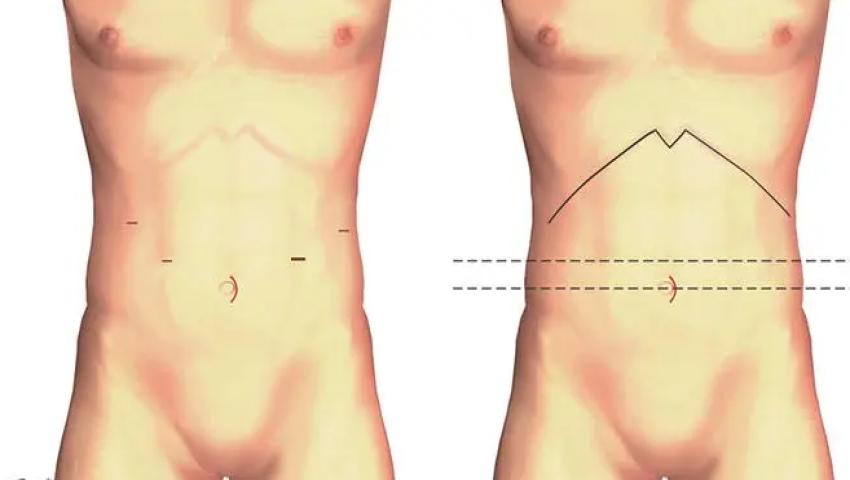
  • The surgeon makes 4 to 5 small incisions (less than 1 cm each) in the abdomen
  • A tiny camera (laparoscope) and surgical instruments are inserted through these cuts
  • The camera projects a magnified view of the stomach and surrounding tissue on a monitor
  • The cancerous portion of the stomach is carefully removed
  • Lymph nodes are also removed as required for staging and to prevent spread
  • The digestive tract is reconnected (anastomosis) to restore normal function

This gastrectomy procedure offers surgeons an excellent view of the surgical field with minimal disruption to surrounding tissue.

Benefits of Laparoscopic Gastrectomy for Stomach Cancer:

The laparoscopic gastrectomy benefits for patients are significant and well-supported by clinical evidence:

  • Smaller incisions — minimal scarring
  • Less blood loss during surgery
  • Significantly reduced post-operative pain
  • Shorter hospital stay — most patients are discharged within 5 to 7 days
  • Faster laparoscopic surgery recovery — patients return to daily activities sooner
  • Lower risk of wound infection
  • Better cosmetic outcome
  • Equally effective cancer removal compared to open surgery in eligible patients

Minimally invasive stomach cancer surgery has transformed the surgical experience for thousands of patients across India.

What Is Open Gastrectomy?

Open gastrectomy is the traditional surgical approach where the surgeon makes a single large incision — typically 15 to 25 cm — across the abdomen to directly access and remove the stomach or the affected portion of it. For decades, open surgery for stomach cancer in India was the only available option, and it remains a trusted and proven technique today.

How Is Open Gastrectomy Performed?

The gastrectomy procedure for open surgery involves:

  • General anaesthesia is administered
  • A large incision is made through the abdominal wall
  • The surgeon directly views and accesses the stomach
  • The cancerous portion — partial or total — is removed along with surrounding lymph nodes
  • The digestive tract is reconstructed
  • The incision is closed with sutures or staples

Open surgery allows the surgeon maximum access and the ability to feel tissue directly, which is valuable in complex or advanced cases.

When Is Open Gastrectomy the Better Choice?

Open surgery remains the preferred approach in certain situations:

  • Advanced stomach cancer surgery where the tumour is large or has spread to adjacent organs
  • Cases where laparoscopic surgery cannot be completed safely
  • Patients who have had multiple previous abdominal surgeries, causing adhesions
  • Emergency surgical situations
  • When robotic or laparoscopic equipment is not available

In these cases, the direct access provided by open surgery gives the surgeon the best chance of complete cancer removal.

Laparoscopic vs Open Gastrectomy — Key Differences:

Here is a clear comparison of open gastrectomy vs laparoscopic gastrectomy to help patients understand the key differences:

When comparing laparoscopic vs open gastrectomy, neither approach is universally superior — the right choice depends entirely on the individual patient’s condition, tumour stage, and the surgeon’s expertise.

Which Surgery Has Better Outcomes for Stomach Cancer?

This is the most important question patients ask, and the answer is reassuring for most.

Survival Rate — Laparoscopic vs Open Surgery:

Multiple clinical studies and trials have confirmed that laparoscopic gastrectomy for stomach cancer delivers equivalent long-term oncological outcomes compared to open surgery in early to locally advanced cases. The stomach cancer surgery survival rate is comparable between the two approaches when performed by an experienced surgical team.

  • 5-year survival rates for Stage 1 stomach cancer after gastrectomy: above 90%
  • Stage 2: approximately 60 to 70%
  • Stage 3: approximately 30 to 50%

The stomach cancer surgery success rate depends more on the stage at diagnosis and the completeness of cancer removal than on which surgical technique is used. Laparoscopic vs open gastrectomy outcomes are equivalent in the hands of a skilled surgeon.

Recovery Time and Quality of Life:

This is where laparoscopic surgery shows a clear advantage:

  • Gastrectomy recovery time in India for laparoscopic surgery: 3 to 4 weeks on average
  • Stomach cancer operation recovery time for open surgery: 6 to 8 weeks
  • Patients after laparoscopic surgery report less pain, earlier return to eating, and better overall quality of life in the weeks following the procedure.
  • Laparoscopic surgery recovery also means patients can begin adjuvant chemotherapy or other treatments sooner if required.

Who Is a Good Candidate for Laparoscopic Gastrectomy?

Not every stomach cancer patient is suitable for minimally invasive gastrectomy. The following criteria are considered:

  • Stage of cancer — Early stage (Stage 1 and 2) and selected Stage 3 patients are ideal candidates for minimally invasive stomach cancer surgery.
  • Tumour location — Cancers located in the lower or middle portion of the stomach are more suitable for laparoscopic removal
  • Patient’s overall health — Patients must be fit enough for general anaesthesia and laparoscopic surgery.
  • No extensive prior abdominal surgery — Previous operations can create scar tissue that complicates laparoscopic access.
  • Surgeon’s expertise — Laparoscopic gastrectomy requires advanced surgical training and experience.

For patients with more complex anatomy or advanced disease, robotic gastrectomy — the next evolution beyond laparoscopic surgery — may offer even greater precision and control. Total vs partial gastrectomy decisions and stomach cancer stages and treatment planning are made on a case-by-case basis after thorough evaluation.

Risks and Complications — What Patients Should Know?

Both surgical approaches carry risks that patients should discuss openly with their surgeon before making a decision.

Common gastric cancer surgery complications for both approaches include:
  • Anastomotic leak — where the reconnected digestive tract does not heal properly
  • Infection at the surgical site
  • Bleeding during or after surgery
  • Dumping syndrome — rapid movement of food from the stomach into the small intestine
  • Nutritional deficiencies following the removal of the stomach
Laparoscopic-specific risks:
  • Conversion to open surgery if complications arise during the procedure
  • Longer operation time compared to open surgery
Open surgery-specific risks:
  • Higher risk of wound infection due to the larger incision
  • Longer gastrectomy recovery time in India with more post-operative discomfort

Discussing these risks with your surgeon helps set realistic expectations and ensures the best possible preparation for surgery.

Stomach Cancer Surgery in Pune — Consult Dr. Lalit Banswal:

If you or a loved one has been diagnosed with stomach cancer and wants to understand whether laparoscopic stomach cancer surgery in Pune is the right option, the most important step is consulting an expert surgical oncologist.

Dr. Lalit Banswal is one of the best cancer surgeons in Pune, with 20+ years of experience, 20,000+ complex cancer surgeries performed, and a Ph.D. in Oncology (Hons). Trained at the Tata Medical Centre, Kolkata, and a recipient of the Maharashtra Ratna Award 2023, Dr. Lalit Banswal specialises in laparoscopic surgery in Pune, robotic surgery in Pune, and advanced GI cancer surgical treatment.

As the best cancer specialist in Pune practicing at Sai Vedant Multi Speciality Hospital, Undri, Pune, Dr. Lalit Banswal offers the full spectrum of stomach cancer treatment in Pune — from initial diagnosis and staging to surgical planning, cancer surgery in Pune, and post-operative care.

Whether you need a first opinion, a second opinion on your surgical plan, or guidance on gastrectomy surgery cost in India, Dr. Lalit Banswal and his team are here to help.

Call / WhatsApp: +919158050180 

Book your appointment with Dr. Lalit Banswal today and get the right guidance on stomach cancer treatment in Pune.

Frequently Asked Questions:

Yes, laparoscopic gastrectomy for stomach cancer is safe and well-established for early to locally advanced cases. Multiple clinical trials have confirmed that it delivers equivalent cancer removal outcomes to open surgery with the added benefits of smaller incisions, less blood loss, and faster recovery. The key is having the procedure performed by an experienced surgical oncologist in Pune who specialises in minimally invasive cancer surgery.

The stomach cancer surgery survival rate depends primarily on the stage at which the cancer is detected and treated. For Stage 1, the 5-year survival rate exceeds 90%. For Stage 2, it is approximately 60 to 70%, and for Stage 3, around 30 to 50%. Early detection and complete surgical removal by the best cancer surgeon in Pune significantly improves outcomes.

Gastrectomy recovery time in India varies by surgical approach. After laparoscopic surgery, most patients recover in 3 to 4 weeks and are discharged within 5 to 7 days. After open surgery, the stomach cancer operation recovery time is typically 6 to 8 weeks. Dr. Lalit Banswal and his team provide complete post-operative support to ensure a smooth and comfortable recovery.

The main difference between open gastrectomy vs laparoscopic gastrectomy lies in the surgical approach. Laparoscopic surgery uses small keyhole incisions and a camera, while open surgery requires one large abdominal incision. Laparoscopic surgery offers faster recovery, less pain, and minimal scarring. Open surgery is preferred for advanced cases or complex tumours. Both are effective forms of cancer surgery in Pune when performed by a skilled surgeon.

There is no single answer that fits every patient. When comparing laparoscopic vs open gastrectomy, the better choice depends on the stage of cancer, tumour size and location, and the patient’s overall health. For early to locally advanced stomach cancer, laparoscopic gastrectomy delivers equivalent survival outcomes with significantly better recovery. For advanced or complex cases, open surgery remains the gold standard. Consulting a stomach cancer specialist in Pune, like Dr. Lalit Banswal, is the best way to determine which approach is right for your specific condition.

शौचातून रक्त! मूळव्याध की कॅन्सर?

शौचातून रक्त आले की मनात एकच प्रश्न येतो — हे मूळव्याध आहे की कॅन्सर? हा प्रश्न स्वाभाविक आहे. पण बहुतेक लोक या लक्षणाकडे दुर्लक्ष करतात किंवा लाजेने डॉक्टरांकडे जाणे टाळतात. हीच सर्वात मोठी चूक असते.

शौचास रक्त का येते याची कारणे अनेक असू शकतात — कधी ती साध्या मूळव्याधामुळे असते, तर कधी ती कोलन कॅन्सरसारख्या गंभीर आजाराचे संकेत असते. दोन्हींमध्ये फरक ओळखणे सामान्य माणसाला कठीण असते — आणि म्हणूनच तज्ज्ञ डॉक्टरांचा सल्ला घेणे अत्यंत आवश्यक आहे.

डॉ. ललित बन्सवाल, बेस्ट कॅन्सर सर्जन पुणे आणि साई वेदांत मल्टीस्पेशालिटी हॉस्पिटल उंद्री येथील अनुभवी सर्जिकल ऑन्कोलॉजिस्ट, सांगतात की शौचातून रक्त येणे हे कधीही सामान्य समजू नये. वेळेवर निदान हेच जीव वाचवू शकते.

शौचातून रक्त येणे म्हणजे काय?

शौचातून रक्त येणे म्हणजे मलविसर्जनाच्या वेळी किंवा नंतर गुदद्वारातून रक्त बाहेर येणे. वैद्यकीय भाषेत याला रेक्टल ब्लीडिंग किंवा मलाशयातून रक्त येणे असे म्हणतात.

रक्त कधी चमकदार लाल रंगाचे असते — जे गुदद्वाराजवळच्या समस्येचे लक्षण असते. कधी ते गडद किंवा काळसर रंगाचे असते — जे आतड्यांच्या वरच्या भागातील समस्या दर्शवते. शौचातून रक्त कारणे वेगवेगळी असू शकतात — मूळव्याधापासून ते कोलन कॅन्सरपर्यंत. त्यामुळे रक्ताचा रंग, प्रमाण आणि इतर लक्षणे लक्षात घेऊन योग्य निदान करणे गरजेचे असते.

मूळव्याध म्हणजे काय? — सोप्या भाषेत समजून घ्या:

मूळव्याध — ज्याला इंग्रजीत Piles किंवा Hemorrhoids म्हणतात — हा गुदद्वाराच्या आतील किंवा बाहेरील रक्तवाहिन्यांना सूज येण्याचा आजार आहे. बद्धकोष्ठता, जास्त वेळ शौचालयात बसणे, कमी फायबरयुक्त आहार, किंवा गर्भावस्था यामुळे मूळव्याध होतो.

मूळव्याध हा कॅन्सर नाही. तो एक सामान्य आजार आहे जो योग्य उपचाराने बरा होतो. पण रक्तस्त्राव मूळव्याध असो वा कॅन्सर — दोन्हींकडे दुर्लक्ष करणे धोकादायक आहे.

कोलन कॅन्सर (आतड्याचा कॅन्सर) म्हणजे काय?

कोलन कॅन्सर म्हणजे मोठ्या आतड्यात किंवा गुदाशयात (rectum) कर्करोगाच्या पेशी वाढणे. हा GI कॅन्सर उपचार पुणे मध्ये सर्वाधिक आढळणाऱ्या कॅन्सरपैकी एक आहे. सुरुवातीच्या टप्प्यात कोलन कॅन्सर लक्षणे फारशी जाणवत नाहीत — आणि म्हणूनच तो उशिरा निदान होतो.

वय ५० वर्षांवरील व्यक्ती, कुटुंबात कॅन्सरचा इतिहास असलेले, किंवा जास्त प्रमाणात मांसाहार करणारे लोक कोलन कॅन्सरच्या जास्त धोक्यात असतात.

मूळव्याध आणि कॅन्सर — फरक कसा ओळखावा?

मूळव्याध की कॅन्सर — हा फरक ओळखणे तज्ज्ञांशिवाय कठीण आहे. पण खालील तक्त्यावरून प्राथमिक फरक समजून घेता येतो:

हा फरक फक्त लक्षणांवरून नाही — योग्य निदान तपासण्यांनीच होते. त्यामुळे शौचातून रक्त आल्यावर स्वतः ठरवू नका — कॅन्सर तज्ज्ञ पुणे यांचा सल्ला घ्या.

मूळव्याधीची लक्षणे:

पाइल्स लक्षणे मराठीमध्ये समजून घेणे महत्त्वाचे आहे:

  • शौच करताना किंवा नंतर चमकदार लाल रक्त येणे
  • गुदद्वाराजवळ वेदना, जळजळ, किंवा खाज
  • गुदद्वाराजवळ मऊ गाठ जाणवणे
  • शौच केल्यावरही पोट साफ न झाल्यासारखे वाटणे
  • बसताना गुदद्वाराजवळ अस्वस्थता जाणवणे
  • रक्तस्त्राव मूळव्याध — कधी कधी जास्त प्रमाणात रक्त येऊ शकते

कोलन कॅन्सरची लक्षणे:

कोलन कॅन्सर लक्षणे सुरुवातीला सौम्य असतात — पण वेळेवर ओळखणे जीव वाचवू शकते:

  • मलासोबत गडद किंवा काळसर रक्त येणे
  • शौचाच्या सवयींमध्ये आठवडाभरापेक्षा जास्त काळ बदल
  • अचानक वजन कमी होणे — कोणत्याही कारणाशिवाय
  • सतत थकवा, अशक्तपणा, आणि फिकेपणा
  • पोटात सतत वेदना, पेटके, किंवा गॅस
  • ॲनिमिया — रक्तातील हिमोग्लोबिन कमी होणे
  • भूक न लागणे

शौचातून रक्त येण्याची इतर कारणे:

शौचातून रक्त कारणे फक्त मूळव्याध किंवा कॅन्सरच नाहीत. इतर कारणेही असू शकतात:

  • फिशर (Anal Fissure) — गुदद्वारात छोटी जखम होणे — बद्धकोष्ठतेमुळे
  • फिस्टुला — गुदद्वाराजवळ पुवाचा मार्ग तयार होणे
  • अल्सरेटिव्ह कोलायटिस — आतड्यांना सूज येणे
  • डायव्हर्टिक्युलायटिस — आतड्यांच्या भिंतींना थैल्या तयार होणे
  • ॲनल पॉलिप्स — आतड्यात किंवा गुदद्वारात छोट्या गाठी
  • गुदद्वारातून रक्त — कधी कधी जास्त जड वजन उचलणे किंवा गर्भावस्थेत येऊ शकते

डॉक्टरांकडे कधी जावे?

खालीलपैकी कोणतेही लक्षण असेल तर त्वरित तज्ञांचा सल्ला घेणे आवश्यक आहे:

  • शौचातून रक्त एकापेक्षा जास्त वेळा आले असेल
  • रक्त गडद, काळसर, किंवा मलासोबत मिश्रित असेल
  • वजन अचानक कमी होत असेल
  • सतत थकवा किंवा अॅनिमिया असेल
  • वय ४५ वर्षांवर असेल आणि कधीही कोलोनोस्कोपी झाली नसेल
  • कुटुंबात कोलन कॅन्सरचा इतिहास असेल
  • लक्षणे दोन आठवड्यांपेक्षा जास्त काळ असतील

निदान कसे केले जाते?

  • शारीरिक तपासणी — डॉक्टर गुदद्वाराची प्राथमिक तपासणी करतात.
  • रक्त तपासणी — ॲनिमिया, CEA (कॅन्सर मार्कर) तपासण्यासाठी.
  • कोलोनोस्कोपी — आतड्याच्या आतील भागाची दुर्बिणीद्वारे तपासणी. सर्वात महत्त्वाची आणि अचूक पद्धत.
  • CT स्कॅन / MRI — कॅन्सर किती पसरला आहे हे समजण्यासाठी.
  • बायोप्सी — संशयित भागातून टिश्यू घेऊन तपासणी — कॅन्सर निश्चित करण्यासाठी सुवर्णमानक पद्धत.

मूळव्याधीवर उपचार:

मूळव्याध उपचार अनेक प्रकारे केले जातात:

औषधोपचार:

  • फायबरयुक्त आहार आणि भरपूर पाणी
  • बद्धकोष्ठतेवरील औषधे
  • क्रीम आणि मलम — वेदना आणि खाज कमी करण्यासाठी

मूळव्याध घरगुती उपाय म्हणून कोमट पाण्याने शेकणे, फायबरयुक्त आहार, आणि भरपूर पाणी पिणे उपयुक्त ठरते — पण हे डॉक्टरांच्या सल्ल्यानेच करावे.

प्रक्रिया आणि शस्त्रक्रिया:

  • रबर बँड लिगेशन
  • स्क्लेरोथेरपी
  • लेझर उपचार
  • पाइल्स उपचार पुणे — साई वेदांत मल्टीस्पेशालिटी हॉस्पिटल उंद्री येथे सर्व प्रकारचे आधुनिक उपचार उपलब्ध आहेत

कोलन कॅन्सरवर उपचार:

कोलन कॅन्सर उपचार स्टेजनुसार ठरवले जातात. डॉ. ललित बन्सवाल, कोलन कॅन्सर सर्जन पुणे, खालील प्रगत उपचार पद्धती वापरतात:

शस्त्रक्रिया:

इतर उपचार:

  • केमोथेरपी — कॅन्सर पेशी नष्ट करण्यासाठी
  • रेडिएशन थेरपी — विशेषतः रेक्टल कॅन्सरसाठी
  • टार्गेटेड थेरपी — विशिष्ट कॅन्सर पेशींवर लक्ष्य साधणारे उपचार

साई वेदांत मल्टीस्पेशालिटी हॉस्पिटल उंद्री येथे सर्व प्रकारचे GI कॅन्सर उपचार पुणे मध्ये एकाच छताखाली उपलब्ध आहेत.

शौचातून रक्त येऊ नये यासाठी काय करावे?

  • दररोज भरपूर फायबरयुक्त आहार घ्या — भाज्या, फळे, धान्ये
  • दिवसातून किमान ८ ते १० ग्लास पाणी प्या
  • नियमित व्यायाम करा — चालणे, योगा
  • जास्त वेळ शौचालयात बसणे टाळा
  • धूम्रपान आणि मद्यपान कमी करा
  • वय ४५ नंतर नियमितपणे कोलोनोस्कोपी करा
  • कुटुंबात कॅन्सरचा इतिहास असल्यास लवकर स्क्रीनिंग करा

डॉ. ललित बन्सवाल यांच्याकडून तज्ज्ञ सल्ला:

डॉ. ललित बन्सवाल, बेस्ट सर्जिकल ऑन्कोलॉजिस्ट पुणे आणि साई वेदांत मल्टीस्पेशालिटी हॉस्पिटल उंद्री येथील कॅन्सर तज्ज्ञ, सांगतात:

“शौचातून रक्त आले म्हणजे कॅन्सरच असतो असे नाही — पण ते नेहमी सामान्यही नसते. बहुतेक लोक लाज किंवा भीतीमुळे डॉक्टरांकडे जाणे टाळतात. यामुळे साध्या मूळव्याधाचे निदान उशिरा होते किंवा कोलन कॅन्सर उशिरा पकडला जातो. लवकर निदान म्हणजे लवकर उपचार — आणि लवकर उपचार म्हणजे पूर्ण बरे होण्याची जास्त शक्यता.”

२० वर्षांपेक्षा जास्त अनुभव आणि २०,००० पेक्षा जास्त यशस्वी शस्त्रक्रिया केलेले डॉ. ललित बन्सवाल पुणे, हडपसर, कोंढवा, उंद्री आणि आजूबाजूच्या परिसरातील रुग्णांसाठी उपलब्ध आहेत.

निष्कर्ष:

शौचातून रक्त आले की घाबरू नका — पण दुर्लक्षही करू नका. मूळव्याध आणि कोलन कॅन्सर दोन्हींवर वेळेवर उपचार झाल्यास पूर्ण बरे होणे शक्य आहे. फरक फक्त वेळेचा आहे — जितक्या लवकर निदान, तितका जास्त फायदा.

आजच भेट द्या — डॉ. ललित बन्सवाल, बेस्ट कॅन्सर सर्जन, साई वेदांत मल्टीस्पेशालिटी हॉस्पिटल उंद्री, पुणे.

संपर्क: +91 9158050180

वारंवार विचारले जाणारे प्रश्न:

चमकदार लाल रक्त, गुदद्वाराजवळ खाज किंवा वेदना असेल तर बहुधा मूळव्याध असतो. गडद किंवा काळसर रक्त, वजन कमी होणे, थकवा, आणि शौचाच्या सवयींमध्ये बदल असल्यास कोलन कॅन्सरची शक्यता असते. मूळव्याध की कॅन्सर हे फक्त योग्य तपासण्यांनीच निश्चित होते — स्वतः निदान करण्याचा प्रयत्न करू नका.

कोलन कॅन्सर लक्षणे सुरुवातीला सौम्य असतात. शौचाच्या सवयींमध्ये बदल, मलासोबत रक्त येणे, अचानक वजन कमी होणे, सतत थकवा, आणि पोटदुखी ही सुरुवातीची लक्षणे आहेत. वय ४५ नंतर या लक्षणांकडे कधीही दुर्लक्ष करू नये.

हो — सुरुवातीच्या टप्प्यातील मूळव्याध उपचार औषधे, आहारातील बदल, आणि रबर बँड लिगेशन किंवा लेझर थेरपीने शस्त्रक्रियेशिवाय होऊ शकतो. मात्र गंभीर मूळव्याधासाठी शस्त्रक्रिया आवश्यक असते. मूळव्याध डॉक्टर पुणे यांचा सल्ला घेऊनच उपचार पद्धती ठरवावी.

शौचातून रक्त एकापेक्षा जास्त वेळा आले असेल, रक्त गडद असेल, वजन कमी होत असेल, किंवा सतत थकवा येत असेल तर त्वरित डॉक्टरांकडे जावे. दोन आठवड्यांपेक्षा जास्त काळ शौचातून रक्त येत असेल तर ती आणीबाणी आहे — कॅन्सर तज्ज्ञ पुणे यांना त्वरित भेट द्या.

पुण्यात मूळव्याध आणि कोलन कॅन्सर उपचारासाठी डॉ. ललित बन्सवाल हे सर्वात अनुभवी आणि विश्वासार्ह कोलन कॅन्सर सर्जन पुणे आहेत. १५ वर्षांपेक्षा जास्त अनुभव आणि रोबोटिक व लॅपरोस्कोपिक शस्त्रक्रियेतील कौशल्यासाठी ते ओळखले जातात. ते साई वेदांत मल्टीस्पेशालिटी हॉस्पिटल उंद्री, Sai Vedant Multi Speciality Hospital Undri येथे उपलब्ध आहेत. अपॉइंटमेंटसाठी +91 9158050180 वर संपर्क करा.

Kidney Cancer Symptoms: Early Warning Signs of Renal Cancer

What if your body has already been sending you warning signs — and you just did not know what to look for?
Kidney cancer is often called the “silent disease” for a reason. In its early stages, it causes little to no obvious symptoms — making it one of the most commonly missed cancers until it has already advanced. Most people who are eventually diagnosed with renal cell carcinoma had no idea anything was wrong. They felt relatively fine. Life went on as usual. And yet, the warning signs were there — hidden in plain sight. Early detection remains the single most important factor in successful kidney tumour treatment in Pune — and it all begins with knowing what to watch for.
When it comes to your health, being aware of the smallest changes in your body can be life-saving. With over 15 years of experience, Dr. Lalit Banswal, known as the Best Genitourinary Cancer Specialist in Pune, has helped countless patients navigate the complexities of oncology. As a leading Kidney Cancer Surgeon in Pune, he emphasizes that recognizing early signs is the first step toward a successful kidney cancer cure. At Sai Vedant Multi-Speciality Hospital, Undri, patients receive world-class care and advanced Kidney Cancer treatment in Pune.

What Is Kidney (Renal) Cancer?

Kidney cancer, or renal cancer, is a disease that starts when healthy cells in one or both kidneys grow out of control and form a mass on kidney tissue. The most common type of kidney cancer in adults is renal cell carcinoma (RCC).

Why Early Detection of Kidney Cancer Is Important?

Early detection is the “Golden Key” in oncology. When renal cell carcinoma is found in its early stages, the kidney cancer survival rate is significantly higher.

  • Localized Treatment: Small tumors can often be removed while saving the rest of the kidney.
  • Preventing Metastasis: Finding a kidney mass early prevents the cancer from spreading to the lungs, bones, or liver.
  • Better Outcomes: A kidney cancer cure is much more achievable when the disease is confined to the organ.

Early Warning Signs of Renal Cancer:

In the beginning, kidney cancer rarely causes pain or visible symptoms. However, there are early symptoms of kidney cancer warning signs that you should never ignore.

  • Blood in the Urine (Hematuria): This is the most common early sign. The blood may appear rusty, deep red, or bright red. Sometimes, the blood is not visible to the naked eye and is only found during a routine urine test.
  • Low Back Pain: Persistent pain on one side of the lower back (flank pain) that isn’t caused by an injury is a classic renal cancer warning sign.
  • A Lump or Mass: A mass on kidney area might be felt through the skin by a doctor or even by the patient. Most kidney tumors are deep, but a growing kidney mass can eventually be felt as a hard lump.

Common Symptoms of Kidney Cancer:

As the tumor grows, the symptoms of kidney cancer become more pronounced. These can often be mistaken for other issues like stones (often researched via a renal stone ppt) or infections.

Top Symptoms to Watch For:
  • Unexplained Weight Loss: Dropping weight without trying is a common sign of many cancers.
  • Persistent Fatigue: Feeling tired all the time, even after resting.
  • Fever: A fever that isn’t caused by a cold or flu and keeps coming back.
  • Anemia: A low red blood cell count can be one of the renal cell carcinoma symptoms.
  • Swelling in Legs/Ankles: When kidneys don’t function properly, fluid can build up.
Symptoms of Kidney Cancer in Females:

While symptoms are largely the same for all genders, symptoms of kidney cancer in females may sometimes be masked by menstrual changes or pelvic issues. Constant bloating or pressure in the side should always be checked by a specialist.

Advanced Renal Cell Carcinoma Symptoms:

When the disease progresses to kidney cancer symptoms stage 4, the cancer has likely spread beyond the kidney.

  • Bone Pain: If the cancer spreads to the bones.
  • Persistent Cough: If the cancer reaches the lungs.
  • High Calcium Levels: Leading to confusion or constipation.
  • Varicocele: Swollen veins around a testicle (usually the left one) can indicate a large kidney tumor.

When Should You Consult Dr. Lalit Banswal - Kidney Cancer Specialist in Pune?

You should book a consultation with Dr. Lalit Banswal if you notice any of the symptoms to kidney cancer mentioned above. Do not wait for the pain to become unbearable.

Dr. Lalit Banswal uses advanced diagnostics to differentiate between a simple cyst and a malignant renal cell carcinoma. Early consultation at Sai Vedant Multi Speciality Hospital can provide you with a clear roadmap for treatment.

Treatment Options for Kidney Cancer at Sai Vedant Multi-Speciality Hospital:

At Sai Vedant Multi Speciality Hospital, Undri, Pune, we offer the latest technology for Kidney Cancer treatment in Pune. Dr. Lalit Banswal tailors the treatment plan based on the stage of the cancer.

  • Partial Nephrectomy: Removing only the tumor and a small margin of healthy tissue (ideal for a small mass on kidney).
  • Radical Nephrectomy: Complete removal of the kidney.
  • Laparoscopic/Robotic Surgery: Minimally invasive options for faster recovery.
  • Targeted Therapy & Immunotherapy: Used for advanced renal cell carcinoma symptoms to stop the growth of cancer cells.

Conclusion:

Understanding kidney cancer symptoms is your first line of defense. If you or a loved one is experiencing any symptoms, consult Dr. Lalit Banswal at Sai Vedant Multi Speciality Hospital. Early diagnosis is the bridge to a healthy future.

FAQs:

Most kidney tumors are caused by mutations in the DNA of kidney cells. Risk factors include smoking, obesity, high blood pressure, and long-term dialysis. Dr. Lalit Banswal at Sai Vedant Multi-Speciality Hospital explains that while some causes are genetic, lifestyle changes can significantly reduce your risk of developing renal cell carcinoma.

The kidney cancer survival rate depends heavily on the stage at diagnosis. For localized tumors (Stage 1), the 5-year survival rate is very high, often exceeding 90%. However, this rate drops if the cancer spreads. Seeking Kidney Cancer treatment In Pune from an expert like Dr. Lalit Banswal ensures you get the most aggressive and effective care possible.

The first signs of kidney cancer often include blood in the urine, a dull ache in the side or back, and a general feeling of tiredness. Many patients initially ignore these symptoms of kidney cancer, thinking they have a urinary infection or back strain.

Can Gallbladder Stones Be Removed Without Surgery?

The short answer is — sometimes, but not always. Most cases of gallstones, medically known as Cholelithiasis, do require surgical intervention for permanent relief. While there are some non-surgical methods available, they work only in very specific and limited situations. Gallbladder calculi, if left untreated or poorly managed, can lead to serious complications. Understanding your options clearly is the first step towards making the right decision for your health.

What Are Gallbladder Stones?

Gallbladder stones are hard deposits that form inside the gallbladder — a small, pear-shaped organ located just below the liver. The gallbladder stores bile, a digestive fluid that helps break down fats. When the components of bile become imbalanced, they can crystallise and form stones ranging from the size of a grain of sand to as large as a golf ball.

These stones are extremely common in India, affecting millions of people across all age groups. Many people live with gallstones without knowing it, as they may not cause any symptoms in the early stages.

How Do Gallbladder Stones Form?

Gallstones form when there is an imbalance in the substances that make up bile. Here are the main reasons they develop:

  • Excess cholesterol in bile — When the liver releases more cholesterol than bile can dissolve, it crystallises into stones
  • Excess bilirubin — Conditions like liver cirrhosis or blood disorders can cause too much bilirubin, leading to pigment stones
  • Incomplete emptying of the gallbladder — If the gallbladder does not empty fully or frequently enough, bile becomes concentrated and stones form
  • Obesity and poor diet — High-fat, low-fibre diets significantly increase the risk
  • Rapid weight loss — Crash dieting causes the liver to release extra cholesterol into bile
  • Family history — Genetics play a role in who is more likely to develop Cholelithiasis

Non-Surgical Options for Gallstone Removal:

Many patients search for gall bladder stone treatment without surgery, and it is a fair concern. Here is what is currently available and what you should know:

1. Ursodeoxycholic Acid (UDCA) Tablets: This is an oral medication that can slowly dissolve small cholesterol-based gallstones. However, it works only if:

  • The stones are small (less than 5 mm)
  • The stones are made purely of cholesterol
  • The gallbladder is still functioning well
  • The patient has no severe symptoms

Even then, treatment can take 6 to 24 months, and stones can return after stopping the medication. This is not a permanent solution for most patients.

2. Extracorporeal Shock Wave Lithotripsy (ESWL): This method uses sound waves to break gallbladder calculi into smaller fragments. It is rarely used today because:

  • It works only for a single small stone
  • Fragments can still cause blockages
  • It does not prevent new stones from forming
  • It is not widely available in India

3. Contact Dissolution Therapy: A solvent is injected directly into the gallbladder to dissolve stones. This is an experimental procedure, not widely practised, and carries significant risks.

The honest truth about removing gallstones without surgery: Most of these non-surgical options are suitable for only a very small percentage of patients. They offer temporary relief and not a permanent cure. If your stones are large, multiple, causing symptoms, or blocking ducts, surgery is the safest and most effective option.

When Is Surgery Necessary?

Surgery becomes necessary when gallstones are causing problems that cannot be managed with medication or lifestyle changes. You need to consult a specialist immediately if you experience:

  • Sudden, severe pain in the upper right abdomen or centre of the abdomen
  • Pain that spreads to the right shoulder or back
  • Nausea, vomiting, and fever with chills
  • Yellowing of the skin or eyes (jaundice)
  • Recurrent episodes of abdominal pain after eating
  • Inflammation of the gallbladder (Cholecystitis)
  • Blockage of the bile duct

In these situations, gall bladder calculi treatment through surgery is the recommended and definitive treatment. The most common and preferred procedure today is Laparoscopic Cholecystectomy — a minimally invasive surgery where the gallbladder is removed through small keyhole incisions using a camera. Recovery is quick, pain is minimal, and patients can usually go home within one to two days.

At Sai Vedant Multi Speciality Hospital in Pune, Dr. Lalit Banswal — a leading Best GI Surgeon and Best Robotic Surgeon — performs advanced laparoscopic and robotic gallbladder removal surgeries with excellent outcomes and faster recovery times.

What Size of Gallbladder Stones Need Surgery?

Size matters when deciding treatment. Here is a simple guide:

It is not just about size though. Even a small stone can cause a complete bile duct blockage and become a medical emergency. Multiple stones, regardless of size, usually require Gallstone Removal Surgery in Pune for permanent resolution.

Conclusion:

Can gallbladder stones be removed without surgery? In rare and very specific cases — yes. But for the vast majority of patients, especially those with symptoms, large stones, or multiple calculi, surgery remains the most reliable, safe, and permanent solution.

Do not delay seeking medical advice if you are experiencing symptoms. Early diagnosis and timely treatment can prevent serious complications. If you are looking for expert gallstone treatment in Pune, consult Dr. Lalit Banswal at Sai Vedant Multi Speciality Hospital for a thorough evaluation and a personalised treatment plan that is right for you.