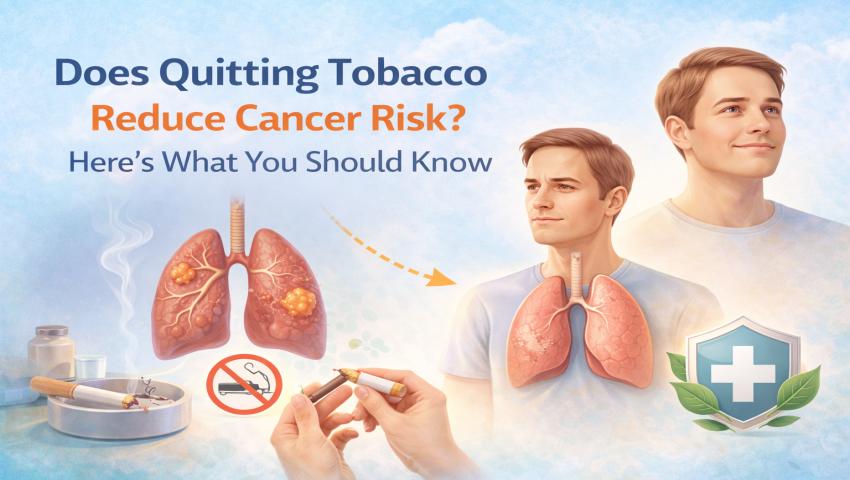
Quitting tobacco is one of the most significant decisions you can make for your long-term health. Whether you smoke cigarettes, use bidis, or consume smokeless tobacco like gutka, the question remains: Does quitting tobacco reduce cancer risk? According to Dr. Lalit Banswal, a leading cancer surgeon with over 15 years of experience, the answer is a resounding yes. At Sai Vedant Multi-Speciality Hospital, many patients ask if the damage is reversible. While the body begins to heal almost immediately, understanding the link between tobacco and cancer is the first step toward a healthier life.
How Tobacco Increases Cancer Risk?
Tobacco products contain more than 7,000 chemicals. At least 70 of these are known carcinogens, meaning they directly cause cancer. When these toxins enter the body, they damage the DNA within your cells.
The effects of tobacco on the body are widespread:
- DNA Damage: Tobacco smoke interferes with the body’s “instruction manual” for cells. When DNA is damaged, cells can grow out of control, creating tumors.
- Weakened Immunity: Tobacco weakens the immune system, making it harder for your body to kill cancer cells before they spread.
- Inflammation: Constant exposure to tobacco leads to chronic inflammation, which is a known trigger for various types of cellular mutations.
Types of Cancer Caused by Tobacco:
Most people associate tobacco only with lung cancer, but the reality is much broader. Tobacco use affects almost every organ. The various cancers caused by tobacco include:
- Lung Cancer: The most common form, responsible for the majority of tobacco-related deaths.
- Oral Cancer: Highly prevalent in India due to chewing tobacco and betel nut.
- Throat and Esophageal Cancer: Damage occurs as smoke or tobacco juices pass through the throat.
- Bladder and Kidney Cancer: Toxins are filtered through the blood and excreted via the urinary system, damaging these organs.
- Pancreatic and Stomach Cancer: Carcinogens enter the bloodstream and affect the digestive system.
- Blood Cancer (Leukemia): Specific chemicals like benzene in tobacco smoke are linked to bone marrow damage.
Does Quitting Tobacco Reduce Cancer Risk?
Yes, quitting tobacco significantly reduces your risk of developing cancer over time. The risk does not drop to zero overnight, but the downward trend begins the moment you stop.
Why the Risk Drops?
When you stop using tobacco, you stop the continuous bombardment of toxins on your cells. This allows your body’s natural repair mechanisms to take over. Over several years, the precancerous cells in the lungs, mouth, and throat can be replaced by healthy tissue.
Key Risk Reduction Statistics:
- 5 Years After Quitting: The risk of mouth, throat, and bladder cancer is cut by half.
- 10 Years After Quitting: The risk of dying from lung cancer is about 50% lower than that of someone who continues to smoke.
- 15 Years After Quitting: The risk of esophageal cancer is significantly reduced, similar to that of a non-smoker.
Impact on Different Forms of Tobacco:
Whether it is cancer by tobacco smoke or smokeless forms, quitting benefits everyone. For those using snuff or gutka, stopping reduces the constant irritation of the oral lining, which prevents the progression of Oral Submucous Fibrosis (OSMF) into malignant cancer.
Health Benefits After Quitting Tobacco:
The body has an incredible ability to heal. Here is a timeline of how your health improves:
- 20 Minutes: Your heart rate and blood pressure drop to normal levels.
- 12 Hours: Carbon monoxide levels in your blood drop, allowing more oxygen to reach your organs.
- 2 to 12 Weeks: Blood circulation improves, and your lung function increases, making physical activity easier.
- 1 to 9 Months: Coughing and shortness of breath decrease as the tiny hair-like structures in the lungs (cilia) start functioning again to clean the lungs.
- 1 Year: Your risk of heart disease is half that of a smoker’s.
- 10 to 15 Years: The risk of various cancers is significantly lower, and your life expectancy increases by several years.
Can Former Tobacco Users Still Get Cancer?
It is important to be realistic: while the risk reduces, it does not disappear entirely. Former tobacco users can still get cancer, especially if they used tobacco heavily for many years. This is because some DNA damage may have already occurred.
Factors that influence remaining risk:
- Duration of Use: How many years you used tobacco.
- Quantity: The amount of tobacco consumed daily.
- Age at Quitting: Quitting at a younger age offers the most significant reduction in risk.
Because of this residual risk, Dr. Lalit Banswal recommends regular screenings for former heavy users. Early detection is life-saving, and being proactive is the best defense.
Conclusion:
Quitting tobacco is the single best thing you can do for your health. While the journey is challenging, the rewards—a longer life, better breathing, and a vastly reduced risk of cancer—are worth the effort. If you are looking for professional guidance or screening, consulting the best oncosurgeon in Pune can provide you with the clarity and medical support you need.
Dr. Lalit Banswal and the team at Sai Vedant Multi-Speciality Hospital are dedicated to helping patients navigate cancer prevention and treatment with advanced care. Remember, it is never too late to quit. Your body starts healing the minute you stop.