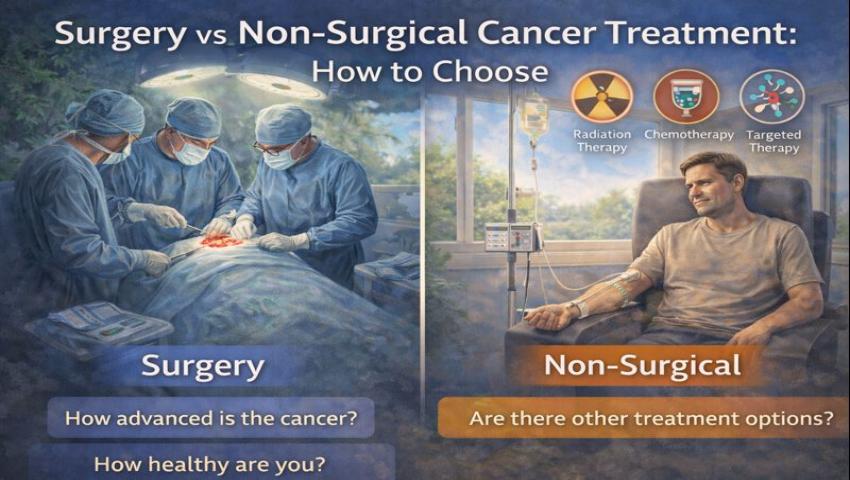
Facing a diagnosis of head or neck cancer is overwhelming for any family. In India, where oral and throat cancers are highly prevalent, understanding the surgical path is the first step toward recovery. When a tumor is removed, the doctor often performs a neck operation to check if the cancer has spread to the lymph nodes.
Dr. Lalit Banswal, a renowned cancer specialist in Pune with over 15 years of experience, specializes in advanced Neck Cancer Surgery in Pune. Operating at the state-of-the-art Sai Vedant Multi-Speciality Hospital, he ensures that every cancer operation is precise, focusing on both curing the disease and preserving the patient’s appearance and function.
Let’s understand:
- What MRND surgery and radical neck dissection actually mean.
- Why a lymphadenectomy (removal of lymph nodes) is vital for your cure.
- The different MRND types and levels of the neck involved.
- How a top Oncosurgeon in Pune like Dr. Lalit Banswal plans the procedure.
- What to expect during recovery and how to choose the right surgeon.
What Is Radical Neck Dissection Surgery (MRND Surgery)?
The MRND full form in medical is Modified Radical Neck Dissection. It is a major neck operation performed to remove lymph nodes that may contain cancer cells.
- Radical Neck Dissection: This is the traditional approach where all lymph node groups from neck level I to V are removed along with three important structures: the muscle (SCM), the vein (IJV), and the nerve (SAN).
- Modified Radical Neck Dissection (MRND): In modern oncology, we prefer this “functional” approach. The goal is to remove all the cancer-carrying nodes but “spare” or save the vital nerves and muscles to maintain shoulder movement and facial symmetry.
Why Neck Dissection Is Needed in Head and Neck Cancer?
Cancer cells often travel from the primary site (like the tongue or throat) through the lymphatic system. These lymph nodes dissection procedures are necessary because:
- Staging: It tells the doctor exactly how far the cancer has spread.
- Prevention: It removes “microscopic” cancer that imaging (CT/MRI) might miss.
- Local Control: It reduces the chance of the cancer returning in the neck area.
Types of Neck Dissection Surgery:
Depending on the spread, a Pune cancer specialist will choose one of the following:
How Dr. Lalit Banswal Decides the Type of Neck Dissection?
As a leading Oncosurgeon in Pune, Dr. Lalit Banswal uses a “Tailored Approach.” The decision is based on:
- The Primary Site: Tongue cancer usually goes to neck level I, II, and III, while laryngeal cancer might go to levels II, III, and IV.
- Imaging Results: High-resolution scans show which nodes are “suspicious.”
- Clinical Examination: Feeling the neck for hard, fixed lumps.
The Neck Dissection Surgical Procedure Explained?
A neck cancer surgery in Pune at Sai Vedant Multi-Speciality Hospital follows a meticulous process:
- Incision: The surgeon makes a specific incision for neck dissection. Common types include the Schobinger incision or the modified Schobinger incision (often called a “hockey stick” shape) to allow the best access.
- Flap Elevation: The skin and platysma muscle are lifted to expose the surgical neck structures.
- Dissection: The surgeon carefully removes the fatty tissue containing the lymph nodes while preserving the carotid artery and vital nerves.
- Closure: Drains are placed to prevent fluid buildup, and the neck dissection incisions are closed with fine sutures for minimal scarring.
Risks and Possible Complications:
While generally safe in expert hands, potential risks include:
- Shoulder Weakness: If the spinal accessory nerve is stretched or removed.
- Numbness: Temporary or permanent loss of sensation around the ear/neck.
- Chyle Leak: Leakage of lymphatic fluid (rare).
- Infection: Managed with high-grade antibiotics at Sai Vedant Multi-Speciality Hospital.
Recovery After Neck Dissection Surgery:
Recovery is a step-by-step journey:
- Hospital Stay: Usually 3 to 5 days.
- Drains: Removed once fluid output decreases.
- Physiotherapy: Essential to keep the shoulder mobile and prevent stiffness.
- Follow-up: Regular visits with your best oncologist Pune to monitor healing.
Why Choose Dr. Lalit Banswal for Head and Neck Cancer Surgery in Pune?
Choosing the right Pune cancer specialist makes all the difference in survival and quality of life.
- Experience: 15+ years and 18,000+ surgeries.
- Precision: Expert in complex lymphadenectomy and MRND surgery.
- Advanced Facility: Sai Vedant Multi-Speciality Hospital offers the latest ICU and surgical technology.
- Patient Focus: Known as the best oncologist Pune for his ethical and compassionate care.
Conclusion:
A radical neck dissection or MRND is a life-saving tool in the fight against head and neck cancer. With early detection and the expertise of Dr. Lalit Banswal, patients can achieve excellent long-term results.
If you or a loved one is seeking Neck Cancer Surgery in Pune, do not wait. Early intervention is the key to a cure.
Book an appointment with Dr. Lalit Banswal today at Sai Vedant Multi Speciality Hospital, Undri, Pune. Call +91 9158050180 for expert guidance.
FAQs About Neck Dissection Surgery in Head and Neck Cancer Operation:
A head and neck oncology surgeon is a specialized doctor who treats cancers of the mouth, throat, thyroid, and salivary glands through surgery. For expert care, Dr. Lalit Banswal is a leading head and neck oncosurgeon in Pune with over 15 years of experience in performing complex tumor removals.
Common symptoms include a mouth ulcer that doesn’t heal, persistent sore throat, difficulty swallowing, a lump in the neck, or a sudden change in voice. If you notice persistent hoarseness or unexplained weight loss, it is vital to consult a specialist immediately.
The surgery involves removing the cancerous tumor along with a margin of healthy tissue. Depending on the spread, the surgeon may also perform a “neck dissection” to remove lymph nodes to prevent the cancer from returning.
When surgery is performed to remove lymph nodes, it is called Neck Dissection (Radical, Modified Radical, or Selective). Other specific surgeries include Thyroidectomy (for thyroid), Glossectomy (for tongue), or Laryngectomy (for the voice box).
Yes, it is a major surgery because the neck contains vital nerves, blood vessels, and structures for breathing and speaking. However, with an experienced surgeon like Dr. Lalit Banswal, the risks are minimized using advanced “nerve-sparing” techniques to ensure a safe recovery.
The cost typically ranges from ₹2,50,000 to ₹6,50,000, depending on the complexity of the case, the stage of cancer, and the hospital facilities. At Sai Vedant Multi Speciality Hospital, patients receive affordable yet international-standard surgical care.
Dr. Lalit Banswal is widely regarded as one of the best neck cancer surgeons in Pune. He is known for his high success rates in MRND surgery and his expertise in minimally invasive techniques that lead to faster healing and less scarring.